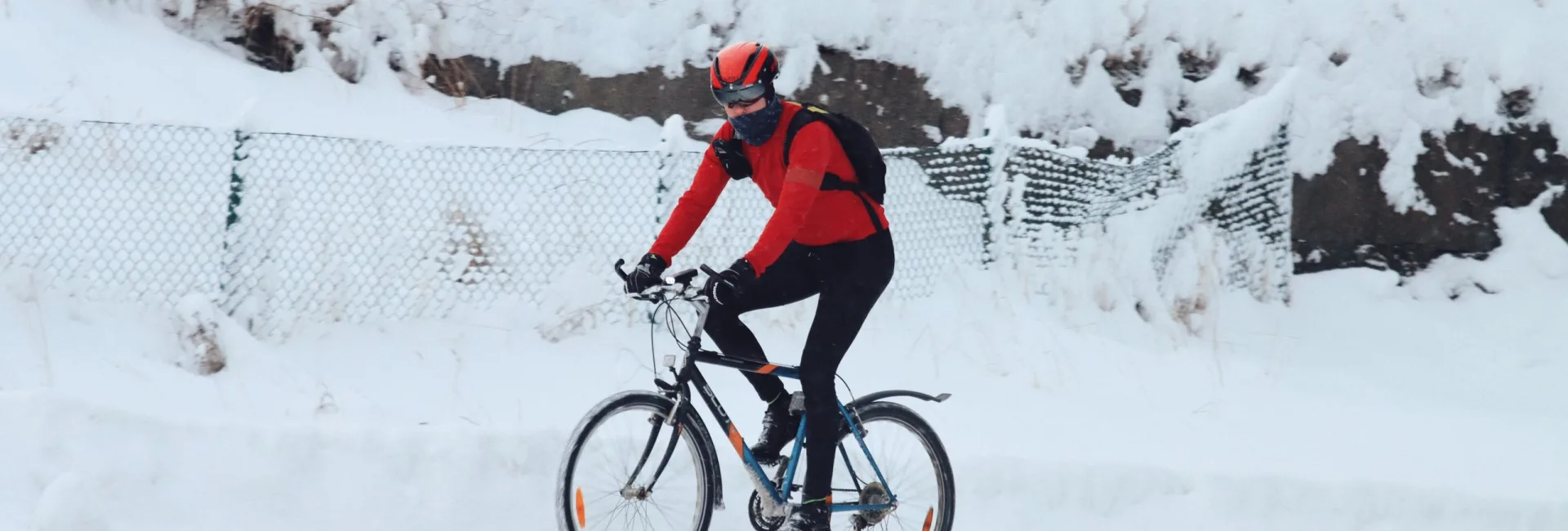
Three winters of cold-weather bike touring have taught me one durable lesson: the ride does not end because you are cold. It ends because your feet are cold, and there is a specific and unglamorous reason for that which almost nobody explains properly.
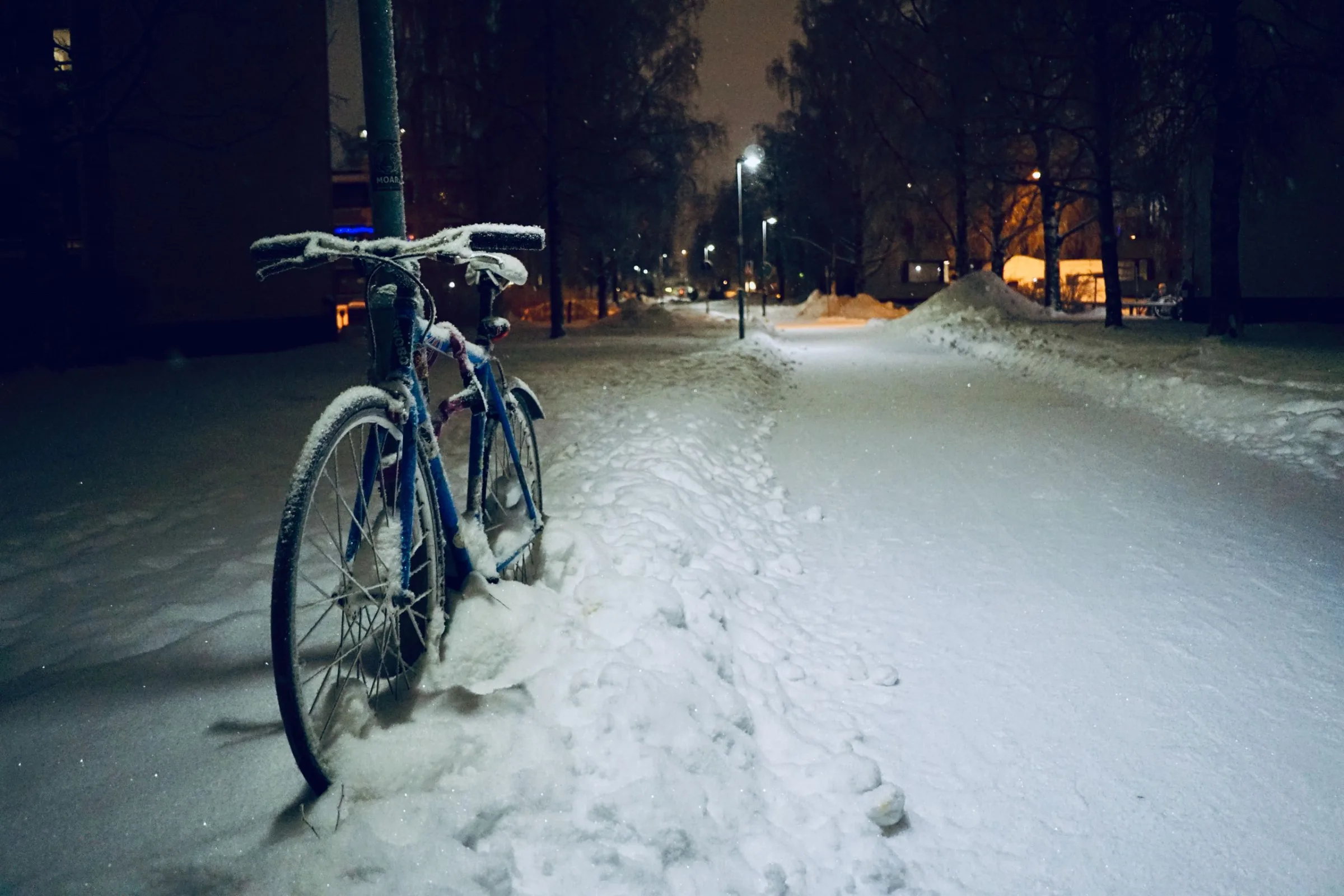
Your feet sweat. On a bike they sweat a lot, because they are doing continuous work inside an enclosed shoe. In the cold, that moisture saturates the sock, and a wet sock conducts heat away from your foot roughly twenty-five times faster than a dry one.
So the failure sequence is: you work hard on a climb, your feet sweat, you crest the hill, you descend at 40 km/h into a headwind, and the wet sock does exactly what physics requires. Ten minutes later you cannot feel your toes.
Adding a thicker sock does not fix this. A thicker sock holds more sweat.
Cold feet on a bike are almost never an insulation problem. They are a moisture management problem wearing an insulation problem's clothes.
Vapour barrier socks. A thin waterproof layer worn between a thin liner sock and the insulating sock. It sounds wrong — you are deliberately trapping sweat against your foot — and it is the single most effective cold-feet fix I know.
The mechanism: the barrier stops moisture reaching the insulation, so the insulation stays dry and keeps working. Your liner sock gets damp and your foot feels slightly clammy, and this is a much better outcome than a soaked boot at −10°C. Mountaineers have used this for decades. Cyclists mostly have not heard of it.
A plastic bread bag works. A purpose-made VBL sock works better and costs about the same as a coffee.
Shoes one size up. Circulation does more than insulation. A boot that is tight with thick socks is worse than a thin sock in a loose boot.
Overshoes, plus tape. Neoprene overshoes handle wind, which is most of the problem on descents. The vents on the sole of a cycling shoe are the leak; cover them with a strip of tape from the inside.
Same physics, easier fix: pogies. Insulated shells that mount on the handlebar, into which you put bare or lightly gloved hands. They look absurd, they weigh nothing, they are warmer than any glove at any price, and you retain full dexterity for the brakes.
Every winter cyclist I know converged on them independently.
Check the practical details in this article against an official source before you travel. Prices, permits and opening times were verified in the month shown at the top of the page and they move faster than we can re-publish.
At 55°N in late December you have about seven hours of usable light. This changes the shape of a tour more than the cold does.
Practical consequences: plan 50–70 km days rather than 100+; have accommodation or a camp identified before you start rather than trusting to find one; and accept that you will do some riding in the dark, which means proper lights rather than the token ones.
The upside nobody mentions: winter light is low and warm all day, so there is no bad hour for photographs, and you get sunrise without setting an alarm.
Winter camping is a separate discipline with its own equipment budget. If you want to ride rather than to camp, the alternative in much of northern Europe is a network of cheap huts, shelters and hostels — Norwegian and Swedish wilderness huts, Scottish bothies, German Schutzhütten — that make credit-card winter touring genuinely viable.
My rule: below −5°C overnight, I would rather pay for a roof. The gear to camp comfortably below that costs more and weighs more than the accommodation for the whole trip.

Writer, gear & logistics
Tom tests things until they break and then reports how long that took. Packing systems, boots, cold-weather kit, missed connections and the unglamorous mechanics of getting from one place to another. Nine years on the same duffel bag and counting.
Independent travel journal
Long-form travel writing with the practical parts left in — what it costs, when to go, and what the person who lives there thinks about it.