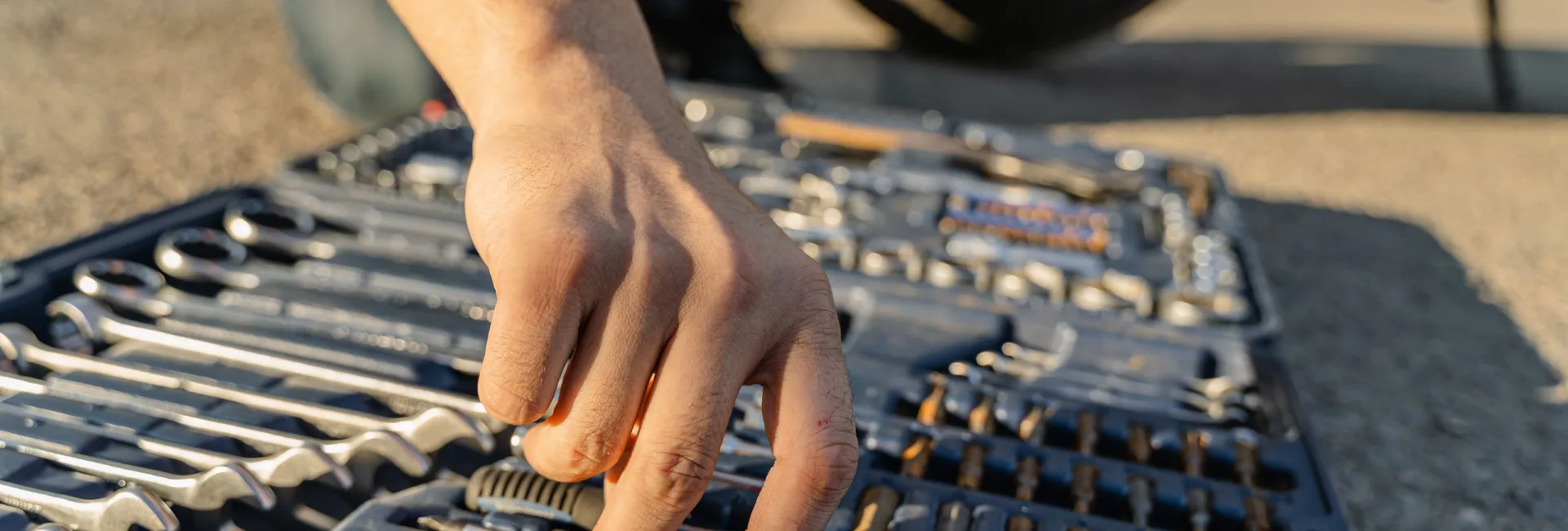
I have been travelling with roughly the same equipment for nine years. Not the same category of equipment — literally the same objects, several of which have been repaired more than once.
This was not a plan. It became one after I did the arithmetic on what I had spent replacing cheap things.
Not weight, not features, not reviews. Can it be repaired, and by whom?
Three sub-questions:
Buy the thing a cobbler or a tailor in a small town can fix without knowing the brand. That is a better durability test than any warranty.
A 40-litre canvas-and-leather duffel, nine years. Restitched twice by a leatherworker in Fez, one zip replaced. It weighs more than a modern equivalent and it will outlive me.
Leather boots with a stitched welt, seven years. Resoled three times. A Goodyear- or Blake-welted boot can be resoled indefinitely; a cemented sole — glued — cannot, and that construction difference is the entire question when buying boots.
A merino base layer, six years. Two darns. Merino resists odour, which is the actual travel argument for it: it can be worn for days between washes, which reduces both laundry and the number you need to carry.
A steel water bottle, nine years. Dented, still fine. The single item with the clearest environmental case, and only if you actually use it — the break-even against disposable bottles is somewhere between 10 and 50 uses depending on the study.
A mechanical watch, inherited. Serviced every five years or so. No battery, no charging, works in a cave.
Honesty is more useful than a recommendation list.
Two waterproof shells. Both delaminated at around three years. The membrane in most waterproof-breathable fabrics has a finite life and cannot be repaired once it separates. This is the category where I have found durability hardest to buy.
A hard-shell suitcase. Cracked at the corner in year two, unrepairable by design. Replaced with a soft bag and never went back.
Three pairs of cheap sunglasses. Hinges. There is no good answer here except buying a pair with metal hinges and screws rather than moulded plastic.
Wireless earbuds. Sealed batteries with a two-to-three year life and no serviceable path. The most disposable category in modern travel gear and I have not found a way around it.
Check the practical details in this article against an official source before you travel. Prices, permits and opening times were verified in the month shown at the top of the page and they move faster than we can re-publish.
This is easier than people expect and it is one of the more rewarding parts of a trip.
Consumables are where a well-chosen kit still generates waste. Three swaps that work without any inconvenience:
Solid toiletries. Shampoo and soap bars remove the plastic bottle, the liquid restriction at security, and the leak risk. This is a straightforward improvement in all three dimensions.
A filter bottle rather than bottled water. A 0.1-micron hollow-fibre filter handles bacteria and protozoa; for viruses you need a purifier or chemical treatment. Know which you have — this distinction matters in South Asia and parts of Africa and is routinely misunderstood.
A cloth bag and a spork. Trivial, weightless, and they eliminate most of the single-use plastic a traveller generates.
The duffel cost roughly four times a nylon equivalent and has outlasted three of them. The boots cost about three times a cheap pair and have run seven years against roughly eighteen months each.
Both are cheaper per year. Neither was cheaper on the day, which is the entire reason most people do not do this — the upfront cost is a real barrier and pretending otherwise is unhelpful.
The workable route in is to replace things one at a time, as they fail, buying the durable version each time. After about four years you have a kit you no longer think about.

Writer, environment & policy
Nadia covers the parts of travel that involve regulation, carbon and who actually benefits — night trains, overtourism rules, certification schemes. She trained as an urban planner in Beirut, works from Berlin, and reads the impact assessments so you do not have to.

Independent travel journal
Long-form travel writing with the practical parts left in — what it costs, when to go, and what the person who lives there thinks about it.