"Eco lodge" is not a protected term. In almost every jurisdiction on earth, a property can call itself one because it has a compost heap and a sign in the bathroom asking you to reuse your towel.
This is not a reason to give up on the category. It is a reason to know what to look for, because genuine examples exist and they tend not to shout about it.
Reusing towels saves the property money on laundry. This is fine — it is also the cheapest possible intervention, and a property whose sustainability communication begins and ends there is telling you where the effort stopped.
The genuine markers are structural and expensive, which is why they are rarer:
These take a two-line email and the quality of the answer is more informative than the answer itself.
Ask what their biggest environmental problem is. The properties genuinely doing the work will answer immediately and specifically, because they have been arguing about it internally for years.

Most are self-declared. A few are audited by a third party, which is the distinction that matters.
Worth something:
Worth less: anything the property awarded itself, anything sold as a logo licence, and booking-platform "eco" badges that rely on self-reported questionnaires with no verification.
For most long-haul trips the flight dominates the footprint so heavily that other choices are a rounding error against it. That does not make those choices pointless — it makes their value local rather than climatic, and worth judging on what they do for the place rather than for the atmosphere.
An honest article has to include this. For most long-haul trips, the flight dominates the footprint so heavily that the accommodation choice is a rounding error.
A return economy flight London to Nairobi is roughly 1.5–2 tonnes of CO₂ equivalent per passenger with radiative forcing included. A week at even a poorly run lodge will not approach that.
This does not make the lodge choice pointless — it makes its value primarily local rather than climatic. A well-run lodge protects habitat, employs people, funds anti-poaching, keeps land out of agriculture. Those are real and they are the actual case for it.
Choose the lodge for what it does to the twenty square kilometres around it. Choose the flight, or not, for what it does to the atmosphere. Conflating the two is how the industry sells long-haul as conservation.
Community-owned. The land and the business belong to a local community trust, which contracts an operator. Namibia's communal conservancies are the most developed example and the wildlife recovery data is genuinely striking.
Conservation-funded. The lodge exists to fund a reserve. Rates are high, guest numbers are deliberately capped, and the accounts are often published.
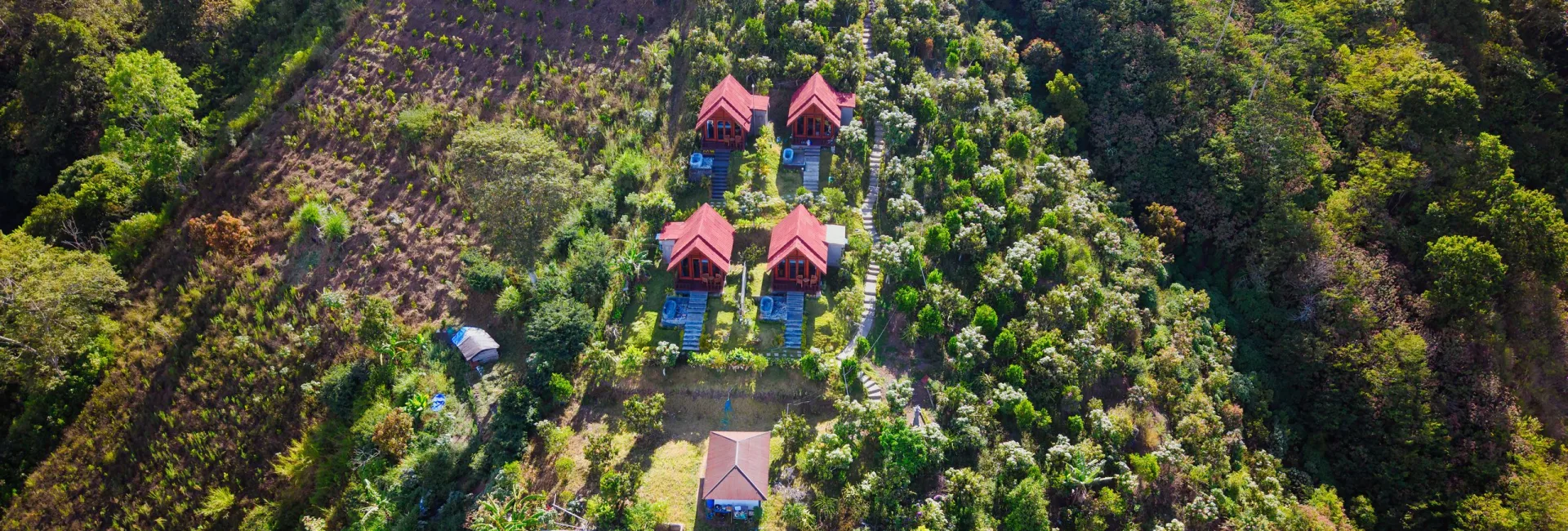
Small and boring. A family-run six-room place with solar panels, a vegetable garden and no marketing department. Frequently the best value and almost never certified, because certification costs money they would rather spend on the roof.
Read the one- and two-star reviews specifically — that is where generator noise, water shortages and staff turnover show up. Look at satellite imagery of the site; the footprint and the road access tell you a great deal. And search the property name alongside the name of the nearest community, which surfaces local reporting that the marketing does not.

Writer, environment & policy
Nadia covers the parts of travel that involve regulation, carbon and who actually benefits — night trains, overtourism rules, certification schemes. She trained as an urban planner in Beirut, works from Berlin, and reads the impact assessments so you do not have to.
Independent travel journal
Long-form travel writing with the practical parts left in — what it costs, when to go, and what the person who lives there thinks about it.