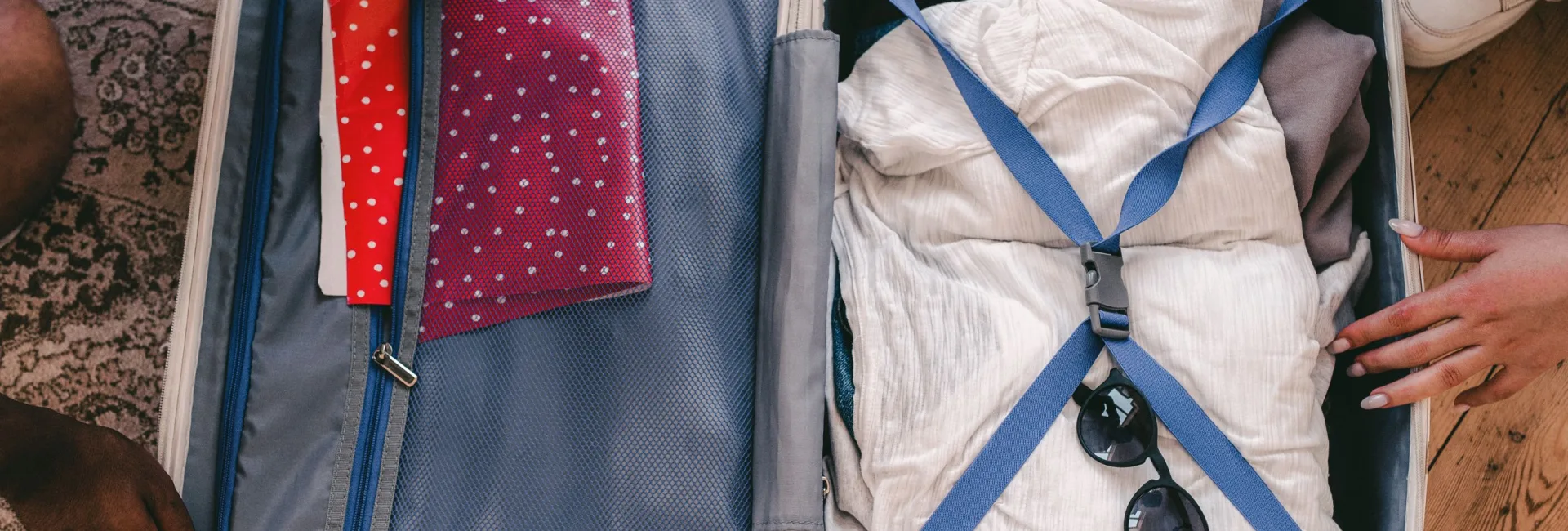
Packing lists do not survive contact with a second trip. The list for Iceland is not the list for Laos, and a list that tries to cover both becomes a list of everything.
What survives is a system: a set of fixed decisions that do not get remade. This is mine, after nine years and about sixty trips, and the useful part is the structure rather than the contents.
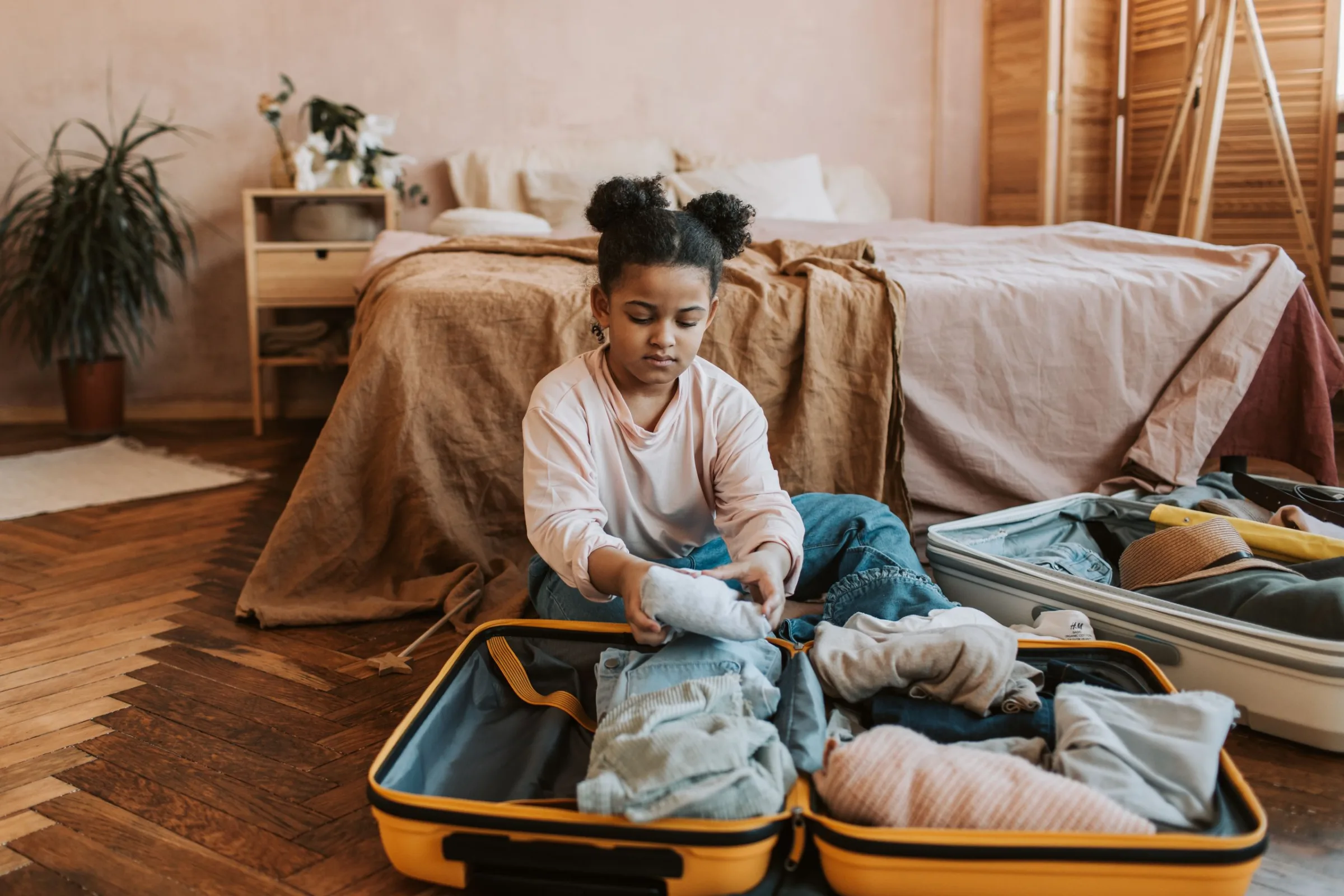
Four small bags live permanently packed and go into the main bag as units. They are never emptied at home.
The effect is that packing becomes a decision about clothes only, and the four categories where forgetting something actually hurts are handled by never touching them.
The failure mode in packing is not carrying too much. It is making forty decisions at eleven at night. The system exists to reduce the number of decisions to about six.
Everything on the bottom half is one neutral — for me, dark grey. Everything on top is within one narrow range.
This sounds like a style choice. It is a volume choice: every top works with every bottom, so five items produce more combinations than eight items that don't coordinate. It also means one thing being dirty never blocks an outfit.
Pack for three or four days, not for the trip length. Wash things in a sink with a solid soap bar, or use a laundry service, which in most of the world costs a few euros per kilo and takes a day.
This is the change that converts a two-week trip from a checked bag to a carry-on, and it is the one people resist longest.
One 35–40 litre soft bag with a clamshell opening — it opens flat like a suitcase rather than loading from the top. Top-loading rucksacks require you to unpack to reach the bottom, which within three days means everything lives in a heap.
Under 40 litres is the practical carry-on ceiling for most airlines. Soft rather than hard, because it compresses into overhead bins that a hard case will not fit.
Packing cubes do not save space. Compression cubes save a little, at the cost of wrinkling.
What they do is save time and prevent the heap. Three cubes — tops, bottoms, underwear and socks — mean you can find anything in a dark dorm without unpacking, and repacking takes ninety seconds.
That is the whole benefit and it is enough to justify them.
Check the practical details in this article against an official source before you travel. Prices, permits and opening times were verified in the month shown at the top of the page and they move faster than we can re-publish.
Each of these was carried for years and used approximately never:
Socks. They are small, they are the item most affected by wet weather, and cold wet feet end more days than any other equipment failure. Four pairs minimum regardless of trip length.
The target that has worked: 7 kg for a warm-climate trip, 9 kg for cold. Above 10 kg you notice it walking; above 12 kg you plan your day around not carrying it.
Weigh the bag once, at home, with a luggage scale. It takes a minute and it is the only way to know whether the system is working, because every bag feels light in the hallway.

Writer, gear & logistics
Tom tests things until they break and then reports how long that took. Packing systems, boots, cold-weather kit, missed connections and the unglamorous mechanics of getting from one place to another. Nine years on the same duffel bag and counting.

Independent travel journal
Long-form travel writing with the practical parts left in — what it costs, when to go, and what the person who lives there thinks about it.