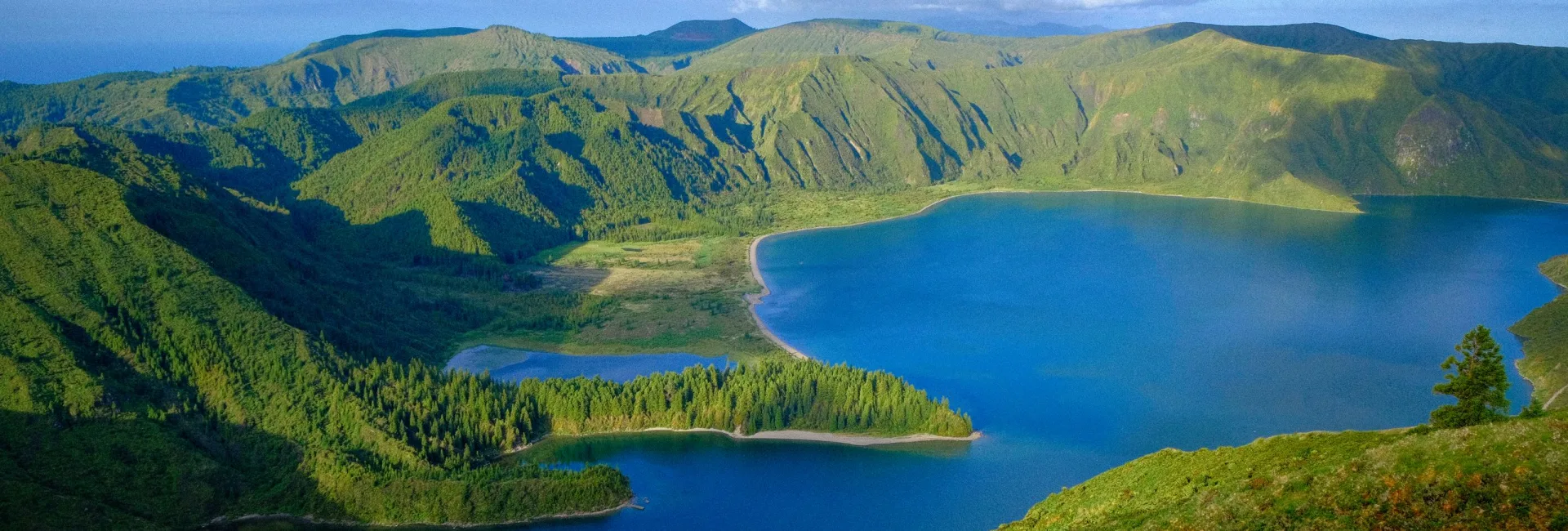
The Azores get described, wearily often, as "Hawaii for Europeans" or "the cheap Iceland." Both comparisons are lazy and both undersell the place. What the Azores actually are: nine islands with nine distinct characters, sitting on the seam of three tectonic plates, 1,400 km from Lisbon and roughly the same from anywhere else.
I went for eight days expecting a green, wet, mildly volcanic archipelago. I came back having swum in a naturally heated ocean pool at dusk on Terceira, and having failed — twice — to see the top of Pico, which at 2,351 m is the highest point in Portugal and spends most of its time inside a cloud.
The inter-island flights on SATA Azores are frequent and reasonably cheap, which makes over-scheduling tempting. Don't. Each hop costs you half a day when you count transfers, and the islands are genuinely different enough that you want time to register the difference.
The sensible pairings:
Nobody comes to the Azores for the cooking, which is exactly why it lands so well. Two things are worth building a day around.
Cozido das Furnas. A stew of beef, pork, chorizo, cabbage and root vegetables buried in a pot in volcanically heated ground beside Lagoa das Furnas and left for six hours. Restaurants in Furnas village bury the pots in the morning and dig them out around noon; you can walk down and watch the excavation. The result is not subtle. It is not supposed to be.
Pico wine. The vineyards are grown in currais — small walled enclosures of black basalt built to shelter the vines from Atlantic salt and wind. The landscape looks like a stone maze and is UNESCO-listed. The wine, particularly the Verdelho, is mineral and slightly saline and unlike anything from the mainland.
The Azores are the only place I have eaten a meal cooked by the planet and drunk a wine that tastes like the rock it grew on, in the same twenty-four hours.
The Azores are one of the best whale-watching regions in the world — around a third of all known cetacean species pass through. Sperm whales are resident year-round. Blue whales come through in April and May.
The honest version: you are on a small boat in the mid-Atlantic and sightings are not guaranteed. Reputable operators work with land-based spotters (vigias) using the old whaling lookout towers, which lifts the success rate substantially — above 90% for something, if not for the specific animal you hoped for. Choose an operator that mentions vigias. Avoid any that guarantee a sighting.
For most long-haul trips the flight dominates the footprint so heavily that other choices are a rounding error against it. That does not make those choices pointless — it makes their value local rather than climatic, and worth judging on what they do for the place rather than for the atmosphere.
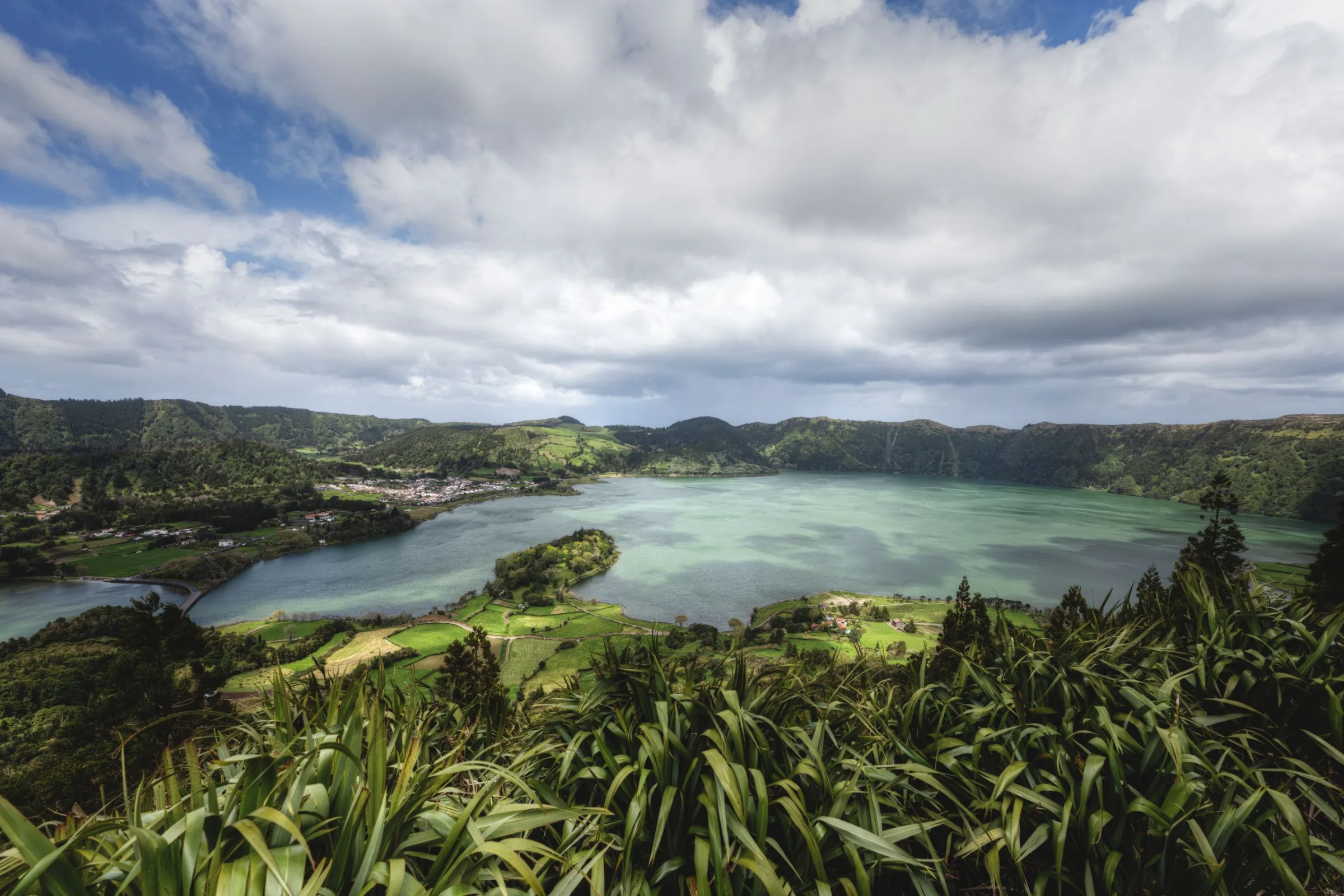
Four seasons in a day is a cliché everywhere and accurate here. The islands sit in the path of Atlantic systems and the interior highlands generate their own weather. Sete Cidades — the twin crater lakes, one green and one blue, that appear on every piece of Azorean marketing — is inside cloud a good half of the time.
The practical response: go up to the viewpoints early, before the daytime heating builds cloud, and go more than once. Miradouro da Boca do Inferno at 8am on a clear morning is worth every failed attempt.
Cheaper than mainland Portugal for accommodation outside Ponta Delgada, comparable for food, and the flights are the variable. Direct routes from Lisbon and Porto are frequent; from North America, Boston and Toronto both fly to Ponta Delgada seasonally. A guesthouse double in shoulder season runs €60–90. A rental car — essential on São Miguel and Pico — around €30 a day.
Go in May, June or September. July and August are warm but busy with mainland Portuguese holidaymakers, and the accommodation stock is small enough that busy is noticeable.

Editor & co-founder
Elin started Beyond The Geo in 2019 with a notebook of border-crossing times and guesthouse phone numbers. She writes mostly about the North Atlantic and the Arctic, and she is the reason every article on this site carries the month its prices were checked.
Independent travel journal
Long-form travel writing with the practical parts left in — what it costs, when to go, and what the person who lives there thinks about it.