Tbilisi is named after warmth. Tbili means warm in Georgian, and the city's founding legend has a fifth-century king's hunting falcon fall into a hot spring. Whether or not that happened, the springs are real, they are still running, and you can still get into them for about fifteen lari.
Two days is short for a city with this much layering — Persian, Russian, Soviet, and a building boom in the last decade that has produced some genuinely strange architecture. But two days is what most people have on the way to or from the mountains, and it is enough to get the shape of the place.
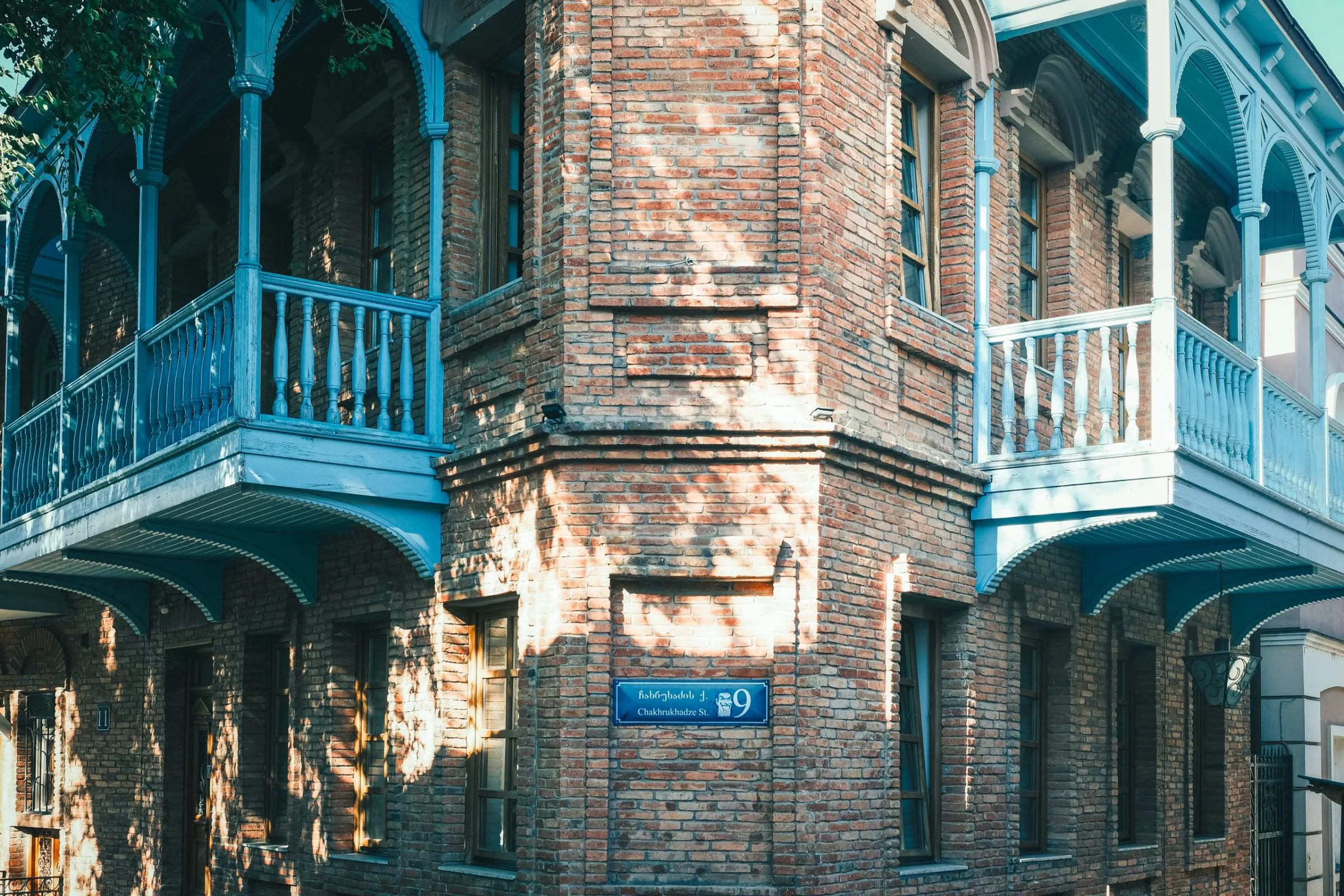
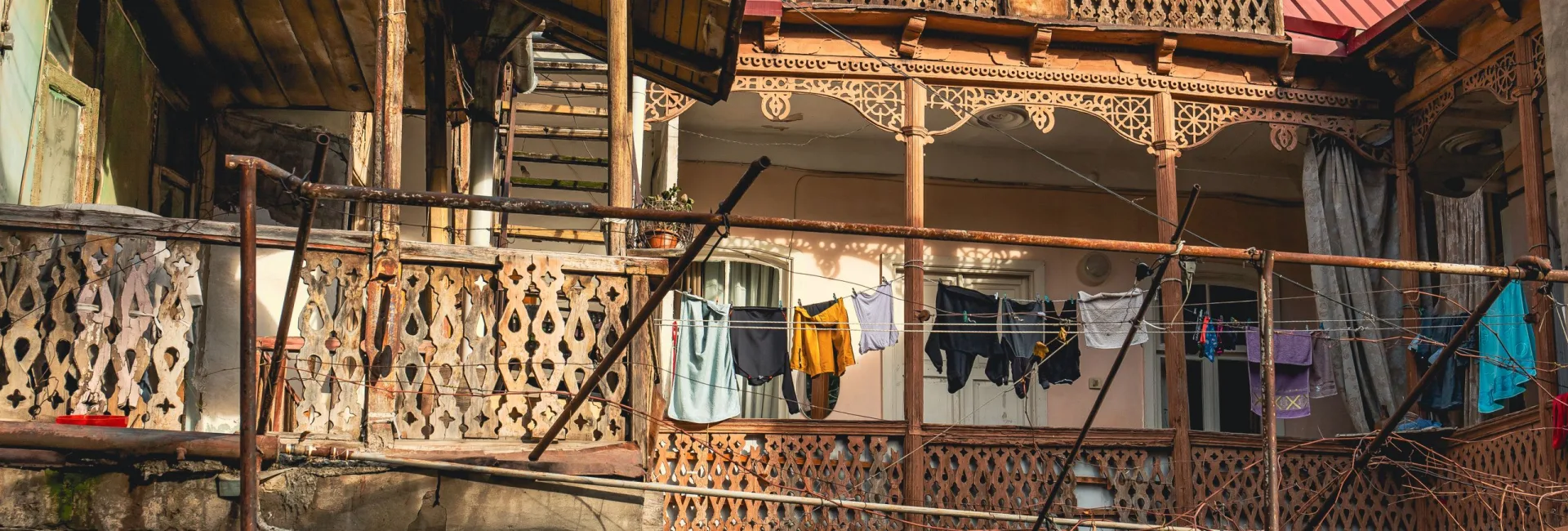
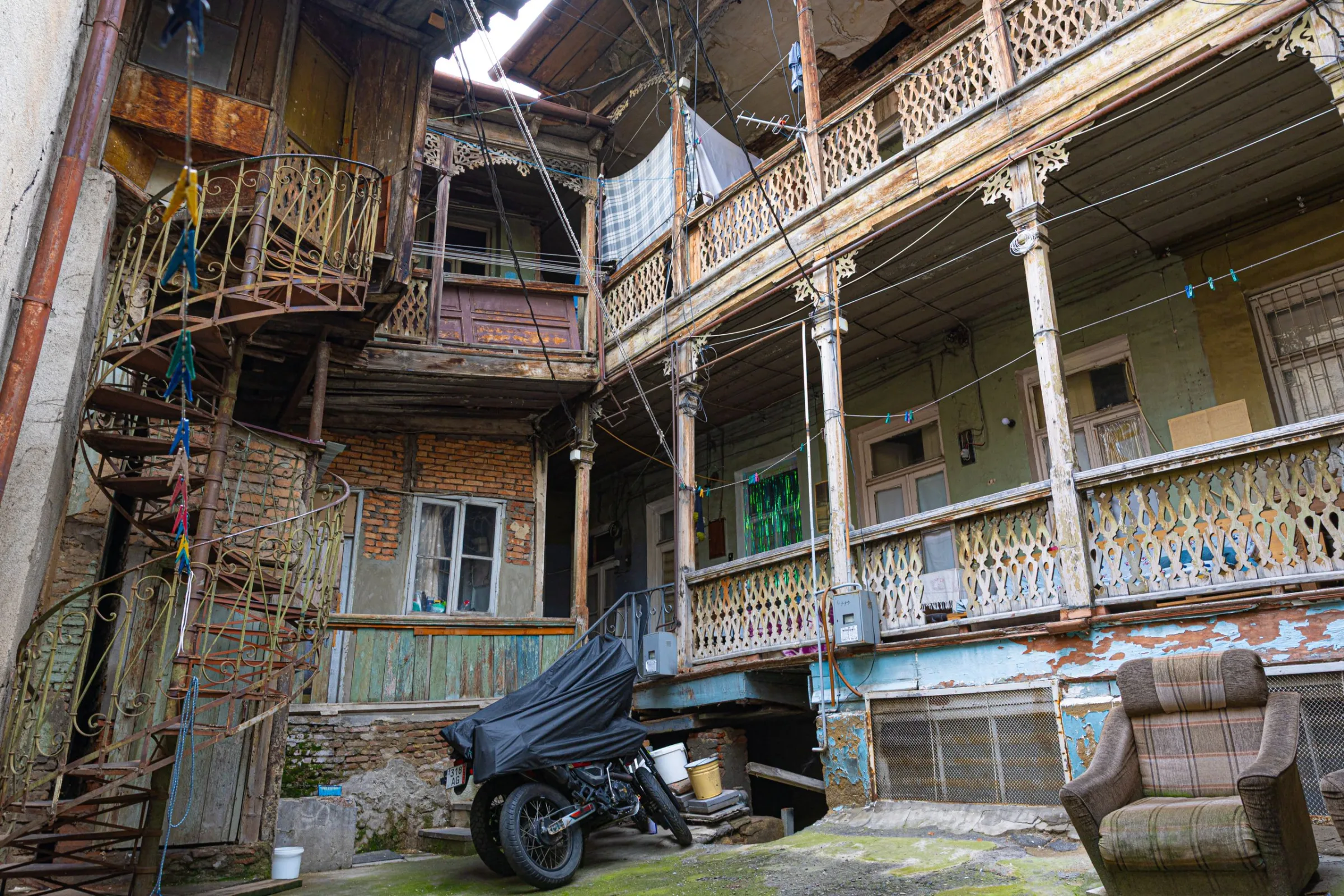
Start in Abanotubani, the bath district, and walk north-west through the old town. What you are looking at is the carved wooden balcony — aivani — a nineteenth-century form that wraps the upper floors of houses in fretwork, glass and colour, cantilevered out over the street.
Many are in poor condition. Some are held up with scaffolding that has been there long enough to acquire its own patina. A restoration programme exists and moves slowly, and there is an active public argument about whether the money should go to the balconies or to the people living behind them.
Walk Chardin Street early, before it turns into a bar strip, then up into the streets around Betlemi. The good balconies are on the ordinary residential streets, not the restored ones.
Find a bakery with a tone — a clay well, fired from below, that the baker leans into headfirst to slap dough against the inside wall. The bread that comes out is shotis puri, canoe-shaped, blistered and best eaten within about ten minutes.
These are everywhere and they are not tourist attractions. A loaf costs one lari. Buy one, tear it, eat it walking.
The test of whether you have found the right bakery: there is no sign, and there is a queue of people who did not have to look it up.
The sulphur baths at Abanotubani sit under brick domes at street level — you go down into them. The water arrives at around 40°C from the springs, smelling strongly of sulphur, and the traditional accompaniment is a kisa scrub from an attendant, which is vigorous to the point of violence and leaves your skin feeling replaced.
Public rooms are cheap and communal and gender-segregated. Private rooms run 60–150 lari an hour depending on the bathhouse and can be shared. Chreli Abano is the ornate blue-tiled one everybody photographs; Bathhouse No. 5 is plainer, cheaper and used by locals.
Check the practical details in this article against an official source before you travel. Prices, permits and opening times were verified in the month shown at the top of the page and they move faster than we can re-publish.
A supra is a Georgian feast with a tamada — a toastmaster — who runs the table through a sequence of toasts, each of which is drunk to the bottom. If you are invited to one, go. Understand that you will be there for five hours and that refusing a toast requires more social skill than accepting it.
If you are not invited to one, eat at a restaurant that does the food without the ceremony. What to order:
Take the cable car from Rike Park up to Narikala fortress for the view, then walk the ridge to the Mother Georgia statue — aluminium, twenty metres, holding a sword in one hand and a bowl of wine in the other, which is as concise a national self-description as any country has managed.
Then go and look at the things nobody photographs. The Chronicle of Georgia, out by the reservoir, is a set of thirty-metre black columns carved with kings and biblical scenes, built by Zurab Tsereteli and reachable only by taxi. It is enormous, half-finished, almost always deserted, and the strangest thing in the city.
The Soviet-era Ministry of Highways building — now a bank — is a stack of interlocking concrete beams that appears to be falling over and has been doing so since 1975.
Money. Georgian lari. Cash still matters in the old town and at markets; cards work in most restaurants.
Getting around. The metro is two lines, costs almost nothing, and requires a rechargeable card bought at a station. Bolt is the taxi app and rides across town are typically 5–10 lari.
Language. Georgian, with its own alphabet — one of only fourteen scripts in the world in current use. Russian is widely understood by older people, English by younger. Gamarjoba for hello, madloba for thanks.
When. May–June and September–October. July and August are hot and the city empties toward the mountains, which is a decent hint.

Senior writer, cities
Marcus grew up between Lagos and south London and has spent nine years writing about how cities actually work at street level — who lives where, what changed, and which neighbourhood the guidebook forgot. He walks every route he publishes.
Independent travel journal
Long-form travel writing with the practical parts left in — what it costs, when to go, and what the person who lives there thinks about it.