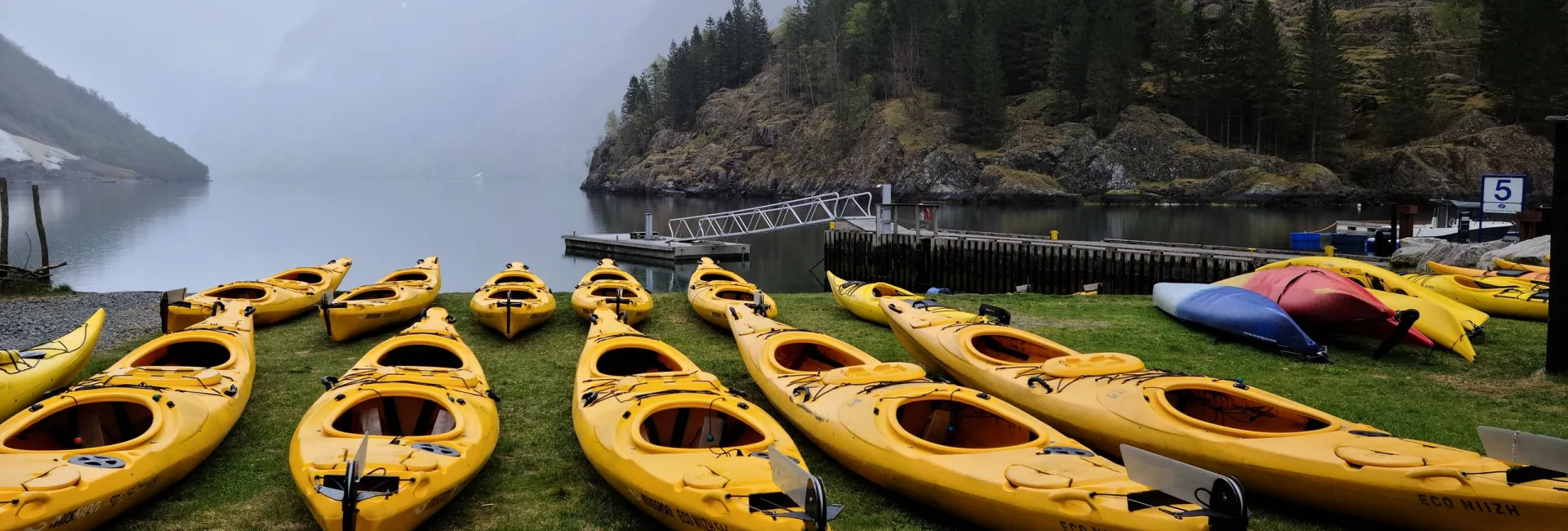
The water in Lofoten in July is about 11°C. This number is the whole story and I did not understand it before I went.
At 11°C, an unprotected person has roughly ten minutes of useful movement in their hands before fine motor control goes, and somewhere between one and two hours before hypothermia becomes life-threatening. Everything about how sea kayaking is taught and run in Arctic Norway follows from those two numbers.
Honest inventory: I had paddled on flat inland water perhaps fifteen times. I could not roll. I had done one wet-exit drill, in a swimming pool, four years earlier.
That is enough to join a guided multi-day trip in Lofoten and it is not enough to go unguided. The distinction is not gatekeeping — the guided version puts a person alongside you whose job is to notice, twenty minutes before you do, that you are getting cold and quiet.
This article describes activity with real risk. It is an account of our experience, not instruction. Assess your own competence, check conditions on the day, and confirm that your insurance covers what you intend to do — many policies exclude trekking above a set altitude, motorcycling and diving.
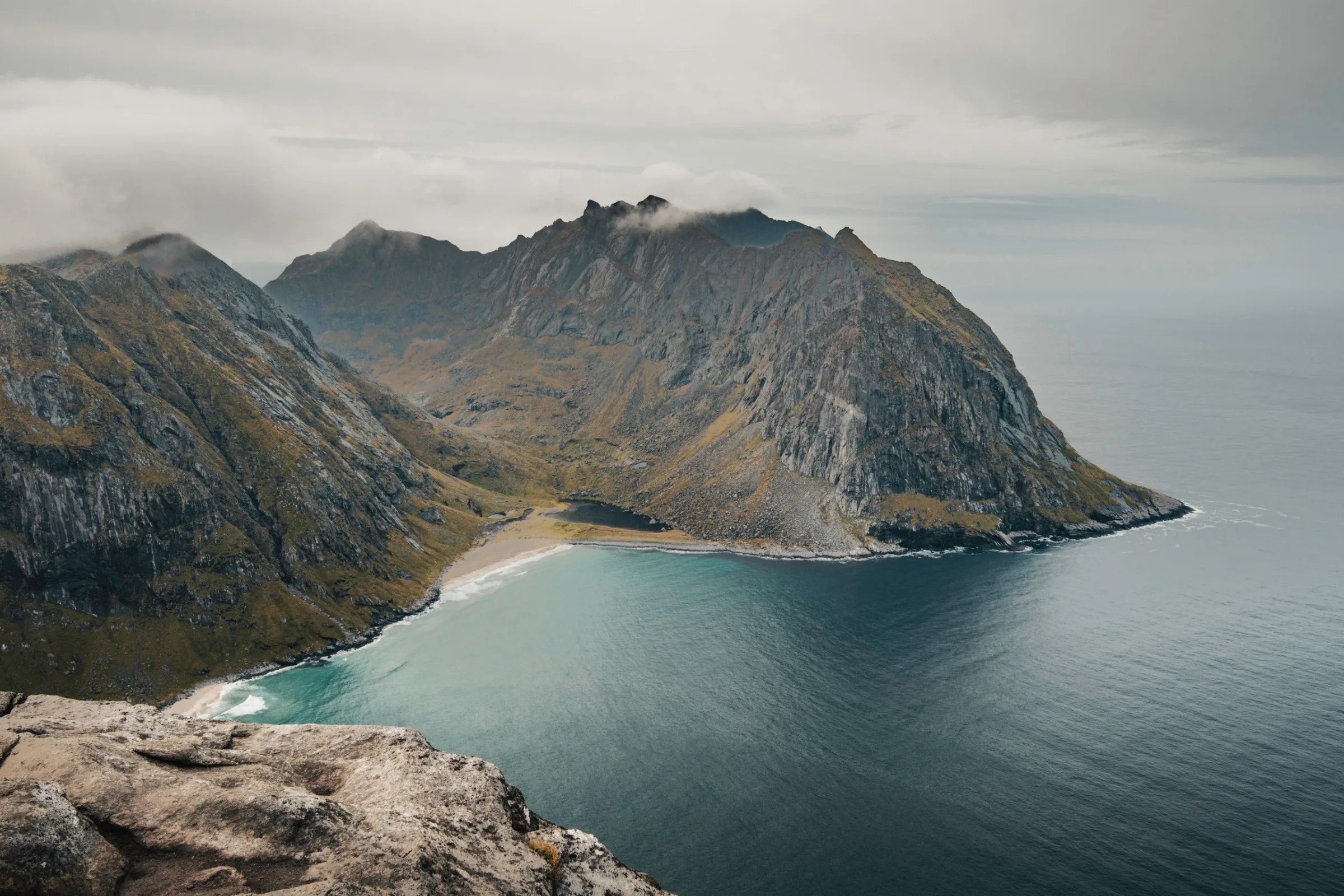
Day one — Reine to Bunes. Four hours across Reinefjorden with the granite walls going up eight hundred metres straight out of the water on both sides. Flat conditions. I remember thinking the whole thing was easier than advertised, which is a thought worth recognising as a warning sign.
Day two — weather day. Wind at 12 m/s from the west, which closes the exposed crossings. We paddled a sheltered arm for two hours and spent the afternoon in a hut. This is normal. Any Lofoten itinerary that does not build in weather days is selling something.
Day three — the long one. Twenty-two kilometres. This is where the difference between fifteen flat-water outings and actual experience became measurable. My forward stroke fell apart around hour four and the guide rebuilt it in about six sentences — rotate the torso, drop the top hand lower, stop pulling with the arms. Twenty per cent less effort immediately.
Day four — sea eagles. White-tailed eagles have a two-and-a-half metre wingspan and Lofoten has one of Europe's densest populations. Three of them worked the ridge above us for most of an hour. Do not, as several operators offer, pay for eagle feeding trips — the practice habituates them and Norwegian authorities have moved against it.
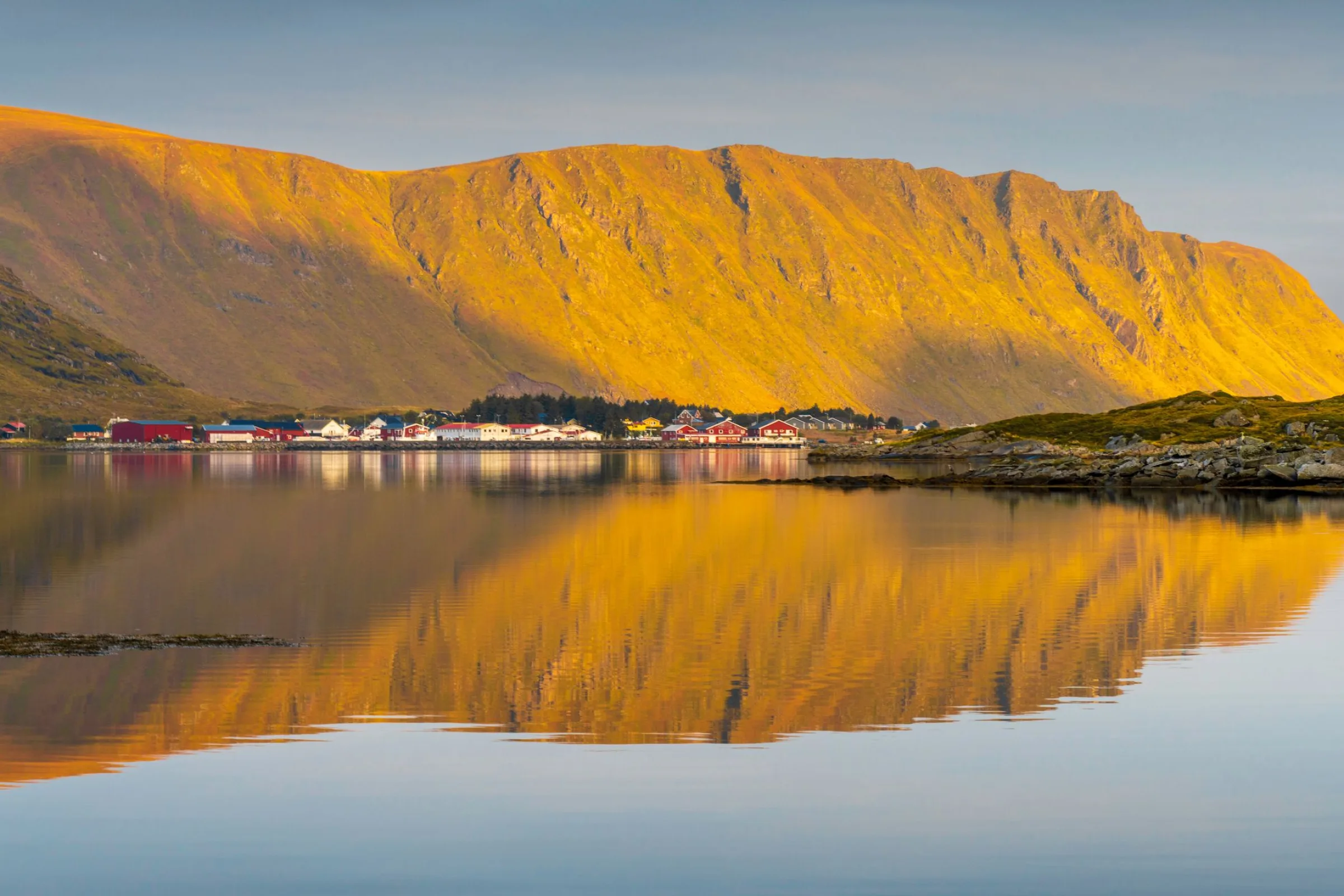
Day five — swell. First real exposure on the outer coast: a metre and a half of long-period swell coming in from the open Norwegian Sea. Not breaking, just enormous and slow, lifting the boat and putting it down. The horizon disappearing every few seconds is more psychologically demanding than it is technically difficult.
Day six — back to Reine. Calm, sunny, and the only day I took photographs, because it was the only day my hands were both free and warm.
The equipment is not there to make the paddling easier. It is there to buy you time in the water, and the amount of time it buys is the only specification that matters.
Yes, guided, in July or August, with a group of no more than six and a guide with a Norwegian or BCU qualification you can verify. Ask specifically: what is the guest-to-guide ratio, what is the rescue plan, what wind speed cancels the day. Operators who answer those crisply are the ones to book.
No, unguided, at any level of inland paddling experience. The tidal streams in the Moskstraumen area — the original maelstrom, the one Poe and Verne wrote about — are genuinely dangerous and the weather changes faster than a forecast resolution.
A six-day guided expedition with equipment runs 12,000–18,000 NOK. Day trips from Reine or Svolvær are 900–1,400 NOK and are the sensible way to find out whether you like it.
Season is June to early September. Midnight sun runs late May to mid-July, which means you can paddle at 11pm in flat light and no wind, and this is the single best thing about the place.

Editor & co-founder
Elin started Beyond The Geo in 2019 with a notebook of border-crossing times and guesthouse phone numbers. She writes mostly about the North Atlantic and the Arctic, and she is the reason every article on this site carries the month its prices were checked.
Independent travel journal
Long-form travel writing with the practical parts left in — what it costs, when to go, and what the person who lives there thinks about it.