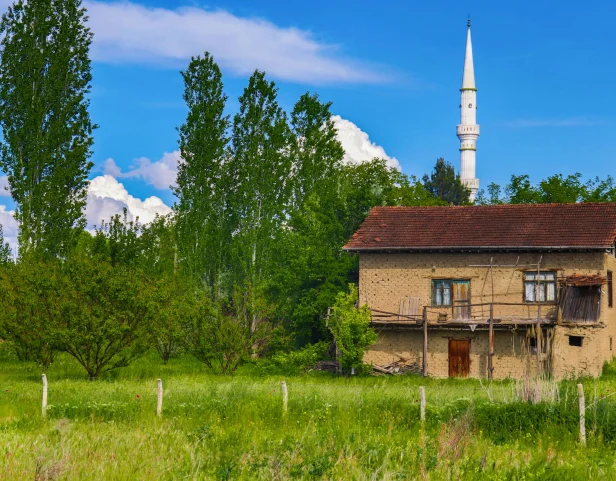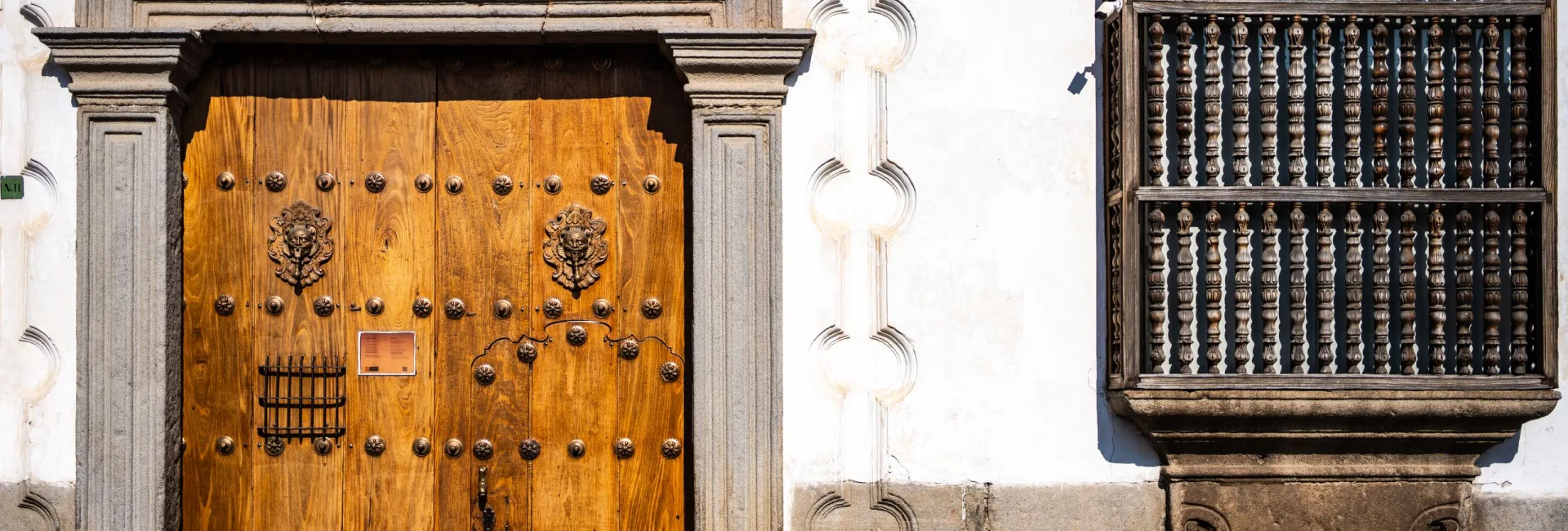
Monuments are built to be read. They were commissioned by people who wanted a specific message transmitted to the future, and they generally succeed at transmitting it.
Doors are different. A door is a practical object that accumulates meaning by accident — through what the household could afford, what it feared, what its neighbours were doing, and what happened to it over two hundred years of being opened. It is the least curated surface in a city and therefore among the most informative.
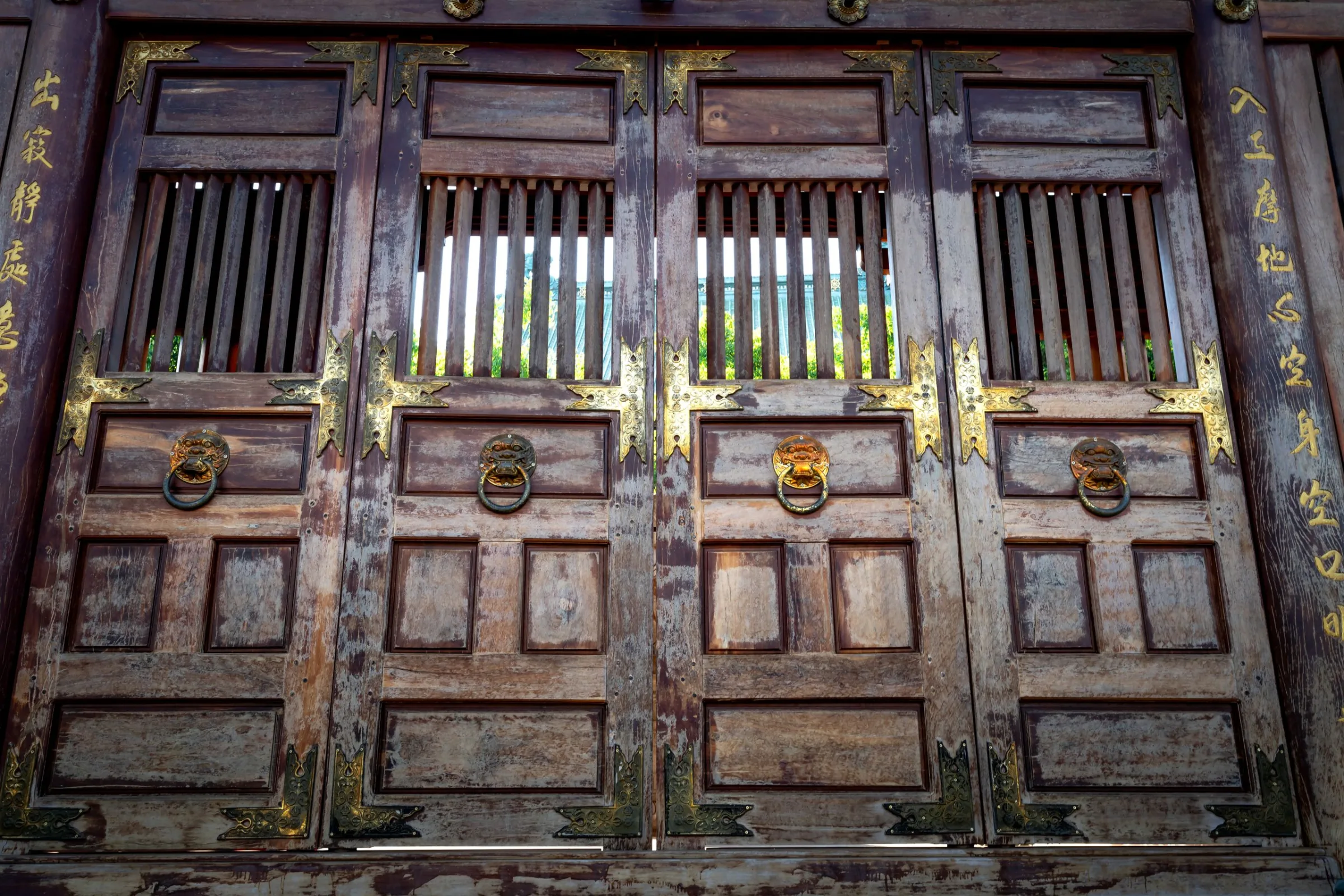
The first question to ask about any old door is what had to fit through it.
A double door with one small pedestrian leaf cut into the larger one — a wicket — means a building that needed to admit carts or animals but usually admitted people. You find these across merchant quarters from Andalusia to Anatolia, and their persistence into the twentieth century in a given street tells you the street kept its trade after others lost theirs.
Very tall, narrow doors on modest houses often mean upper-floor storage reached by hoist — grain, wool, salt cod. In Porto and in the Norwegian trading towns you can still see the hoist beams above them.
Stone façades get refaced. Hardware rarely does, because replacing a working lock is expensive and pointless.
A door with two knockers is a household telling you, permanently and in metal, how it organised the question of who opens it.
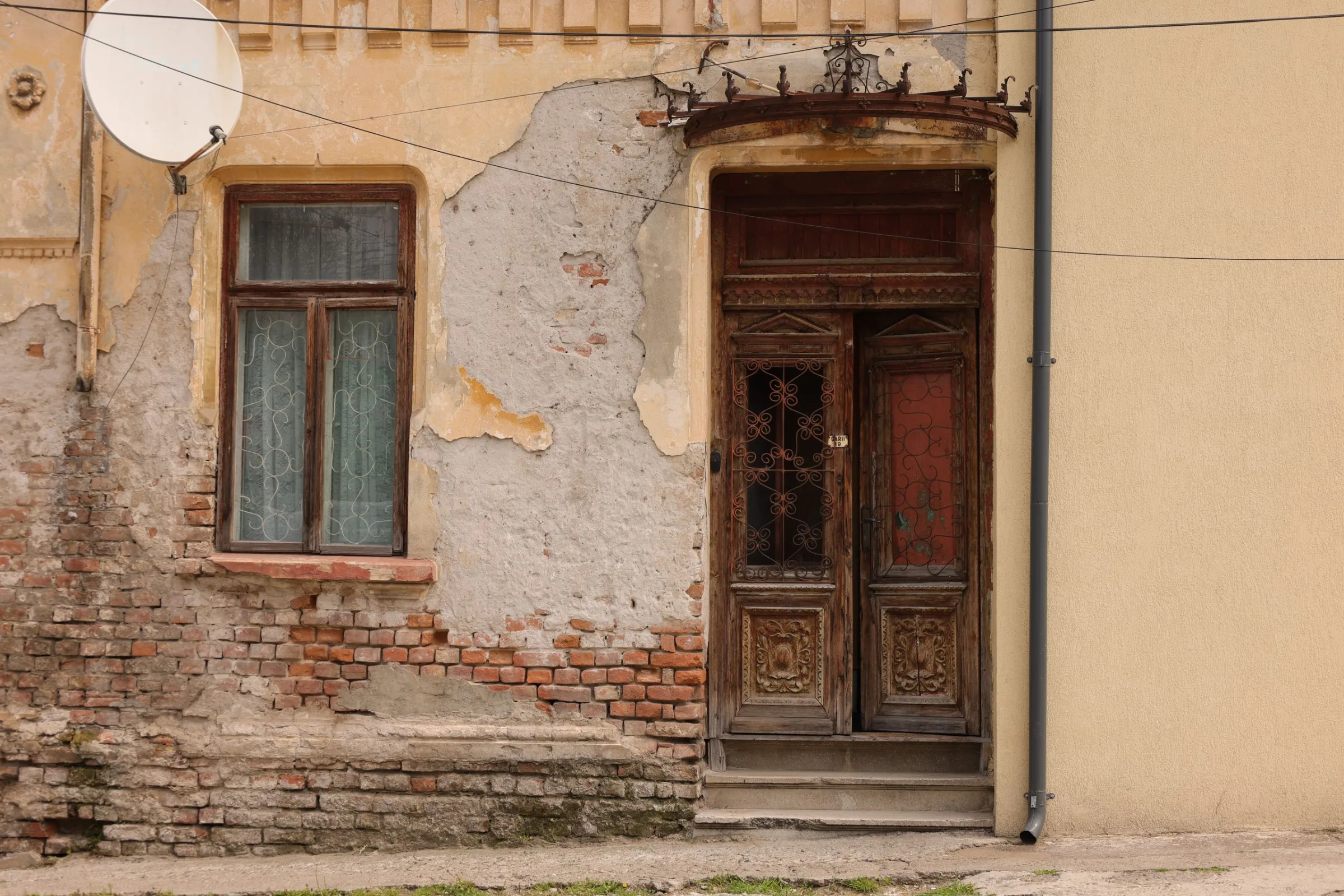
The uniform door colours of postcard towns are rarely spontaneous.
In Dublin, the Georgian doors are famously varied and the standard explanations — a widow's protest, a way home when drunk — are folklore. The likelier account is that the terraces were built under leases specifying uniform brick and stone, leaving the door as the only surface an owner could personalise.
In Chefchaouen the blue is now maintained partly as an economic asset. In Burano, house colours are said to require permission from the local authority, which nominates the permitted shade.
The point is not that these are inauthentic. It is that colour uniformity is nearly always a rule — sometimes a lease covenant, sometimes a conservation code, sometimes just what the one paint supplier stocked.
The raised stone sill exists to keep water out, and its height is a flood record. In Venice, the progressive raising of thresholds and doorframes over the last century is visible on almost every canal-side building and is the most direct physical evidence of relative sea level change in the city.
Elsewhere, thresholds carry protective marks: apotropaic symbols scratched or burned into the frame to keep out harm. Daisy wheels and interlocking Vs are common in English and northern European vernacular buildings, usually near openings — doors, windows, chimneys — because those were the vulnerable points.
They are easy to miss and, once you know to look for them, surprisingly common.
Three practical notes for anyone tempted to make a series of this, as many people are:
And the courtesy: these are people's homes. If someone is in the doorway, ask. In practice the answer is nearly always yes and is frequently followed by an explanation you could not have got any other way.

Senior writer, cities
Marcus grew up between Lagos and south London and has spent nine years writing about how cities actually work at street level — who lives where, what changed, and which neighbourhood the guidebook forgot. He walks every route he publishes.

Independent travel journal
Long-form travel writing with the practical parts left in — what it costs, when to go, and what the person who lives there thinks about it.