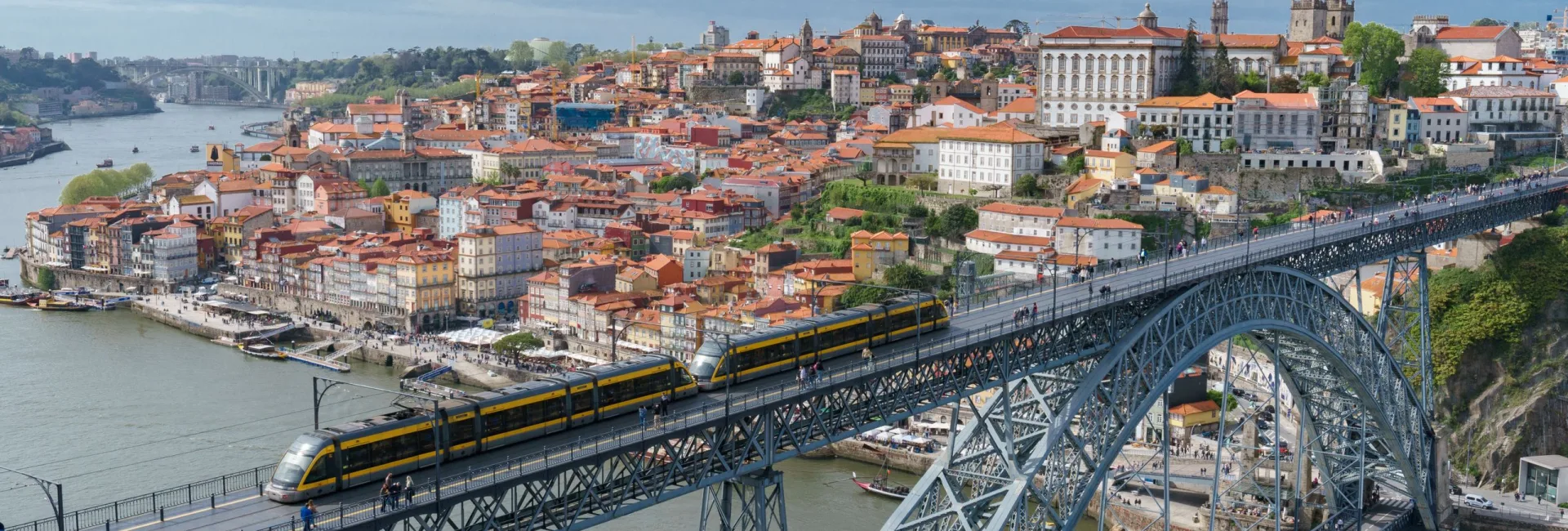
Porto is a city built on a gorge, which means every walk is also a workout and every corner is potentially a viewpoint. The historic centre is compact enough to cross in forty minutes and vertical enough that you will not want to.
This route runs about six kilometres over five to six hours with stops. It descends more than it climbs, which is the only sensible direction to plan a walk here.
The cathedral sits on the highest point of the old city, a fortress-like Romanesque block with a Gothic cloister and a silver altarpiece that survived the Napoleonic invasion because somebody bricked a wall in front of it.
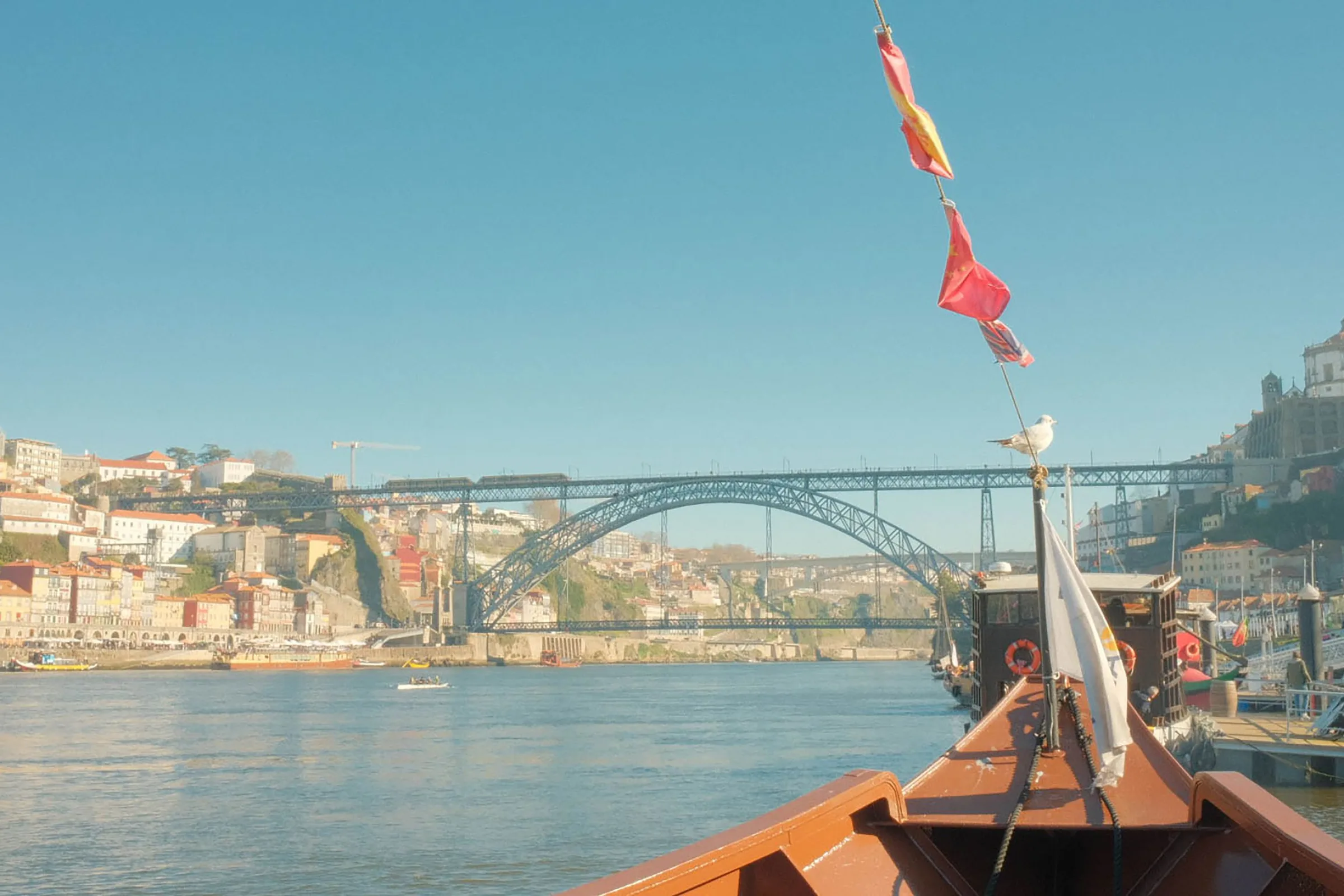
The terrace outside gives you the whole descent you are about to make: the tiled roofs falling away, the Douro, the Dom Luís I bridge, and the port lodges on the far bank in Gaia.
West and down through the old Jewish quarter. Narrow, steep, residential, and — unusually for a centre this touristed — still occupied by people who live there. The Miradouro da Vitória is a small unpaved terrace with the single best view of the Ribeira rooftops and, most afternoons, about four people on it.
Check the practical details in this article against an official source before you travel. Prices, permits and opening times were verified in the month shown at the top of the page and they move faster than we can re-publish.
Ribeira, the UNESCO-listed waterfront directly below the bridge, is beautiful and is where every photograph of Porto is taken and is, from about eleven in the morning, extremely full. Miragaia is the stretch immediately west of it: the same river, the same coloured houses stacked at improbable angles, a fraction of the people.
This was the fishermen's and merchants' quarter. There is a small church with an ornate gilded interior, a set of stairs that appear in no guidebook, and cafés where a coffee costs seventy cents.
The rule in Porto is simple: whatever the famous viewpoint is, walk two hundred metres west of it.
Do not skip it; it earns its reputation. But treat it as a passage rather than a destination. Walk the arcade at river level, look up at the six or seven storeys of housing crammed onto the slope behind, and continue to the bridge.
The upper deck carries the metro and pedestrians at 60 metres above the water. Walking it is the best five minutes in the city. It was built in 1886 by Téophile Seyrig, who had been Eiffel's partner — the family resemblance to the tower is not accidental.
Cross on the upper deck, not the lower. The lower is at road level and you get nothing.
Technically a separate city. All the port houses are here, on the south bank, because the river's north side belonged to Porto's merchants and the south was cheaper and better oriented for cool cellars.
Two ways to do it:
If you only taste one thing, make it a white port, which almost nobody outside Portugal drinks and which — served cold with tonic — is what people in Porto actually order in summer.
The Gaia cable car runs from the riverside to the upper bridge deck for €7, which is a lot for ninety seconds and worth it after six kilometres. Alternatively the funicular on the Porto side, Funicular dos Guindais, does the same job for €4.
Francesinha. A sandwich of steak, sausage and ham under melted cheese, drowned in a beer-and-tomato sauce, usually with a fried egg and chips. It is enormous and indefensible and Porto is very proud of it.
Tripas à moda do Porto. Tripe with white beans. The city's nickname is tripeiros — tripe-eaters — from a fifteenth-century episode when the population gave all its meat to Henry the Navigator's fleet and kept the offal. Whether you like it or not, it is the most historically loaded dish in Portugal.

Senior writer, cities
Marcus grew up between Lagos and south London and has spent nine years writing about how cities actually work at street level — who lives where, what changed, and which neighbourhood the guidebook forgot. He walks every route he publishes.
Independent travel journal
Long-form travel writing with the practical parts left in — what it costs, when to go, and what the person who lives there thinks about it.