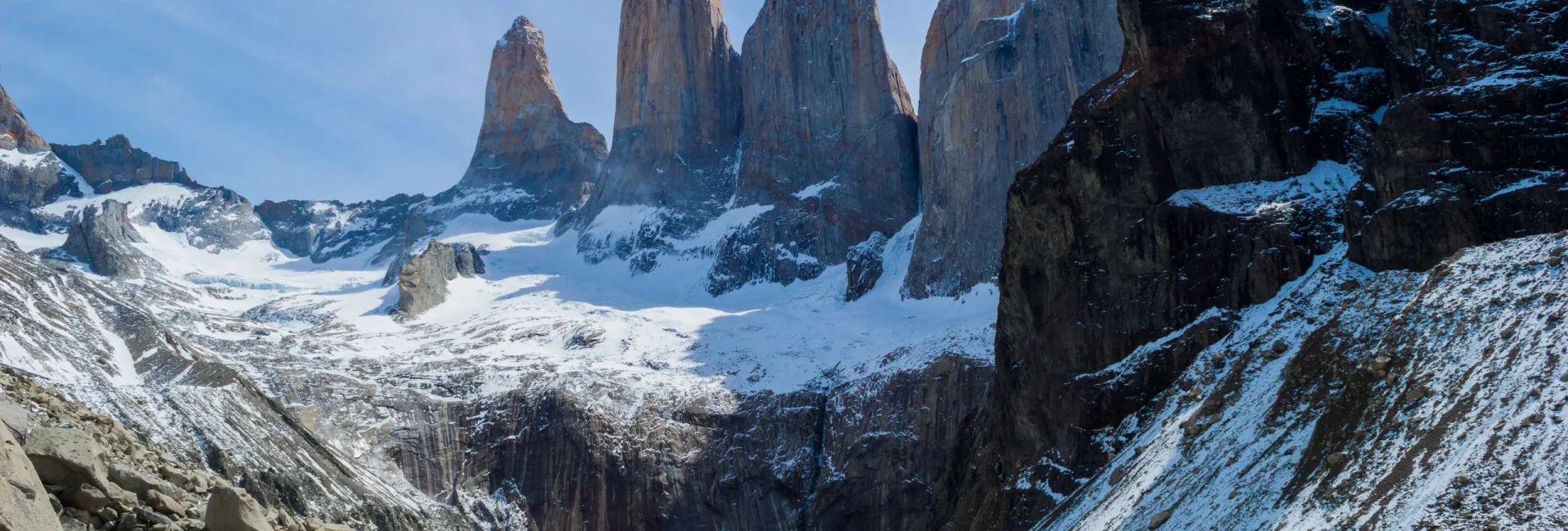
In January, the refugio at Torres del Paine takes bookings eleven months ahead and the trail to the base of the towers moves at the pace of its slowest walker — which, on a good day, is the pace of a queue. In March, I walked the same trail and met nine people.
The trade is real and worth stating plainly: you swap some daylight and some certainty for space, colour and about thirty per cent off almost everything. Whether that trade is good depends entirely on what you came for.
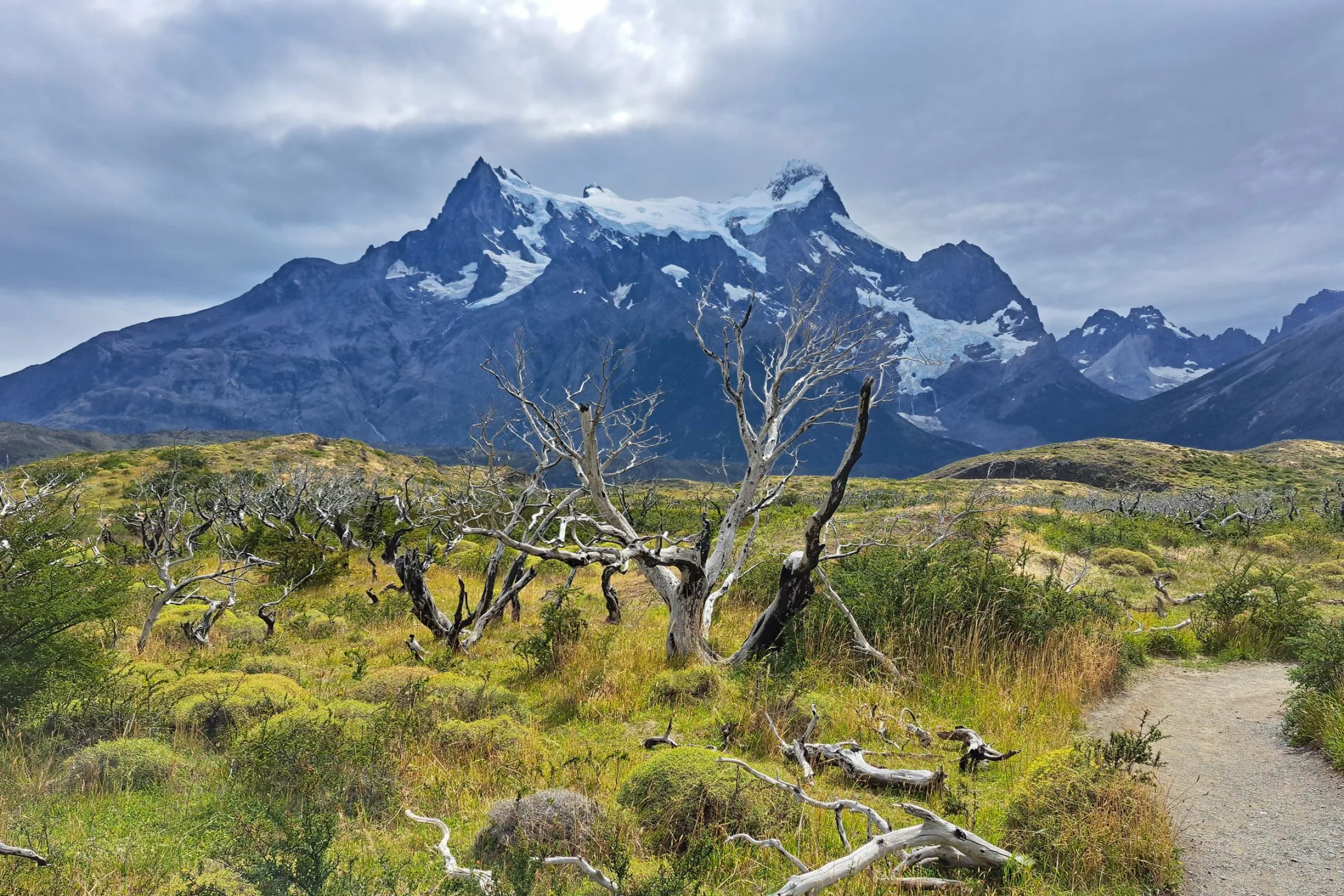
This is the argument that converts people. Patagonian wind in December and January is not a weather condition, it is a structural feature — 80 to 100 km/h gusts are routine, and they arrive on clear days, which is the cruel part. By mid-March the pressure gradient softens. By April it is a different country.
I am not claiming calm. I am claiming that you can stand up on a ridge and hold a camera still, which in January you frequently cannot.
The lenga and ñire beech forests that cover the lower slopes turn in late March. Not gently — the whole valley floor goes rust, ochre and a deep wine red over about ten days, against grey granite and glacial blue. It is the single best reason to come.
Summer Patagonia is a landscape of shapes. Autumn Patagonia is a landscape of colour. The photographs people remember are almost always the second kind.
Honesty requires this section.
This article describes activity with real risk. It is an account of our experience, not instruction. Assess your own competence, check conditions on the day, and confirm that your insurance covers what you intend to do — many policies exclude trekking above a set altitude, motorcycling and diving.
This is roughly what I did, and I would repeat it with one change noted below.
Days 1–3, El Chaltén. Argentina's trekking capital, and the only place on this list where the best walks start from the town itself — no permits, no transfers. Laguna de los Tres for Fitz Roy, Laguna Torre for Cerro Torre. Do them on consecutive good days and rest on the bad one.
Days 4–6, El Calafate. Perito Moreno glacier, which is genuinely as good as promised and one of the few advancing glaciers left. Go on the boat as well as the walkways; the scale does not read from land.
Days 7–13, Torres del Paine. The W trek across five days, or the full O circuit if you have eight and have booked. In shoulder season you can sometimes get refugio space a week out, which is unthinkable in January.
Days 14–18, Carretera Austral. This is the change I would make: give it longer. The stretch north from Cochrane through Cerro Castillo is emptier, greener and less organised than anything further south, and it is where I met the people I still email.
You will cross between Chile and Argentina at least twice. Two things routinely go wrong: travellers carry fresh fruit, meat or dairy across (confiscated, sometimes fined), and travellers assume the crossing is open late (many close at 20:00 or earlier, and some are seasonal). Neither is dramatic if you plan for it. Both ruin an afternoon if you don't.
Rental cars need a notarised permit — permiso de salida — to cross, arranged with the rental company several days in advance and costing around 50 USD. Agencies will not do it at the counter on the morning.
If you have never been and you get one shot, and you want maximum daylight and guaranteed open services, go in January and accept the crowds. If you have flexibility, or you have been before, or you care more about how a place looks than how convenient it is: go the second half of March. It is not a compromise. It is the better trip.

Editor & co-founder
Elin started Beyond The Geo in 2019 with a notebook of border-crossing times and guesthouse phone numbers. She writes mostly about the North Atlantic and the Arctic, and she is the reason every article on this site carries the month its prices were checked.
Independent travel journal
Long-form travel writing with the practical parts left in — what it costs, when to go, and what the person who lives there thinks about it.