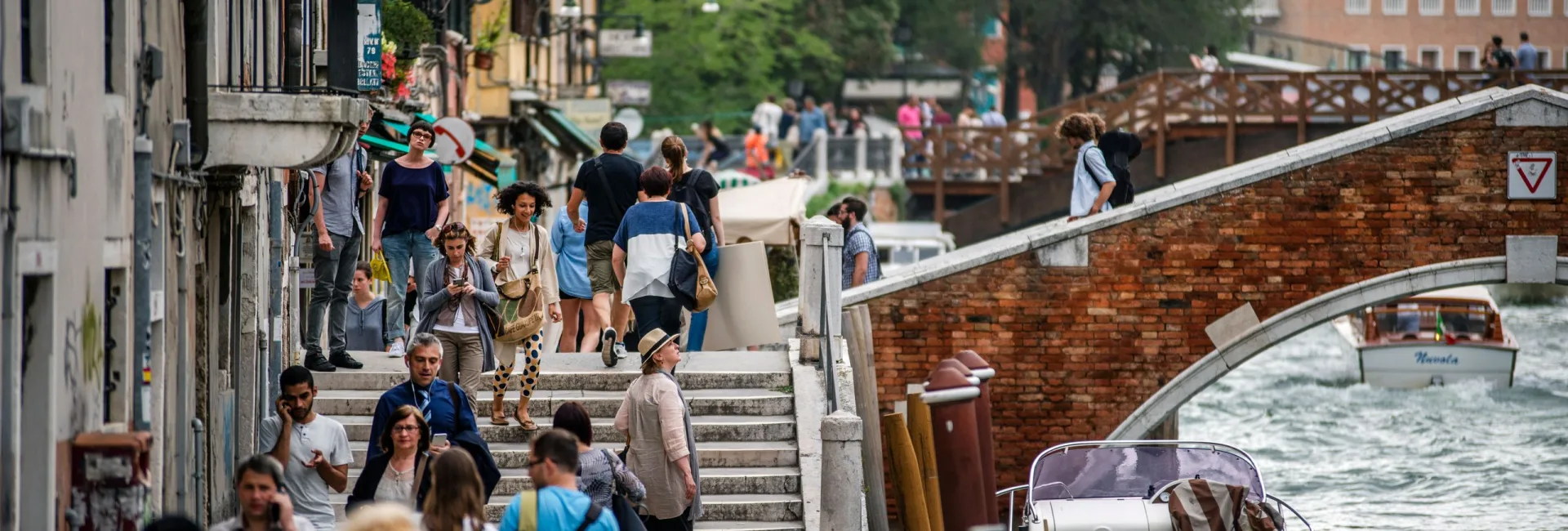
Venice receives somewhere around 25–30 million visitors a year against a historic-centre population that has fallen below 50,000. That ratio gets quoted constantly and it is the wrong number to focus on.
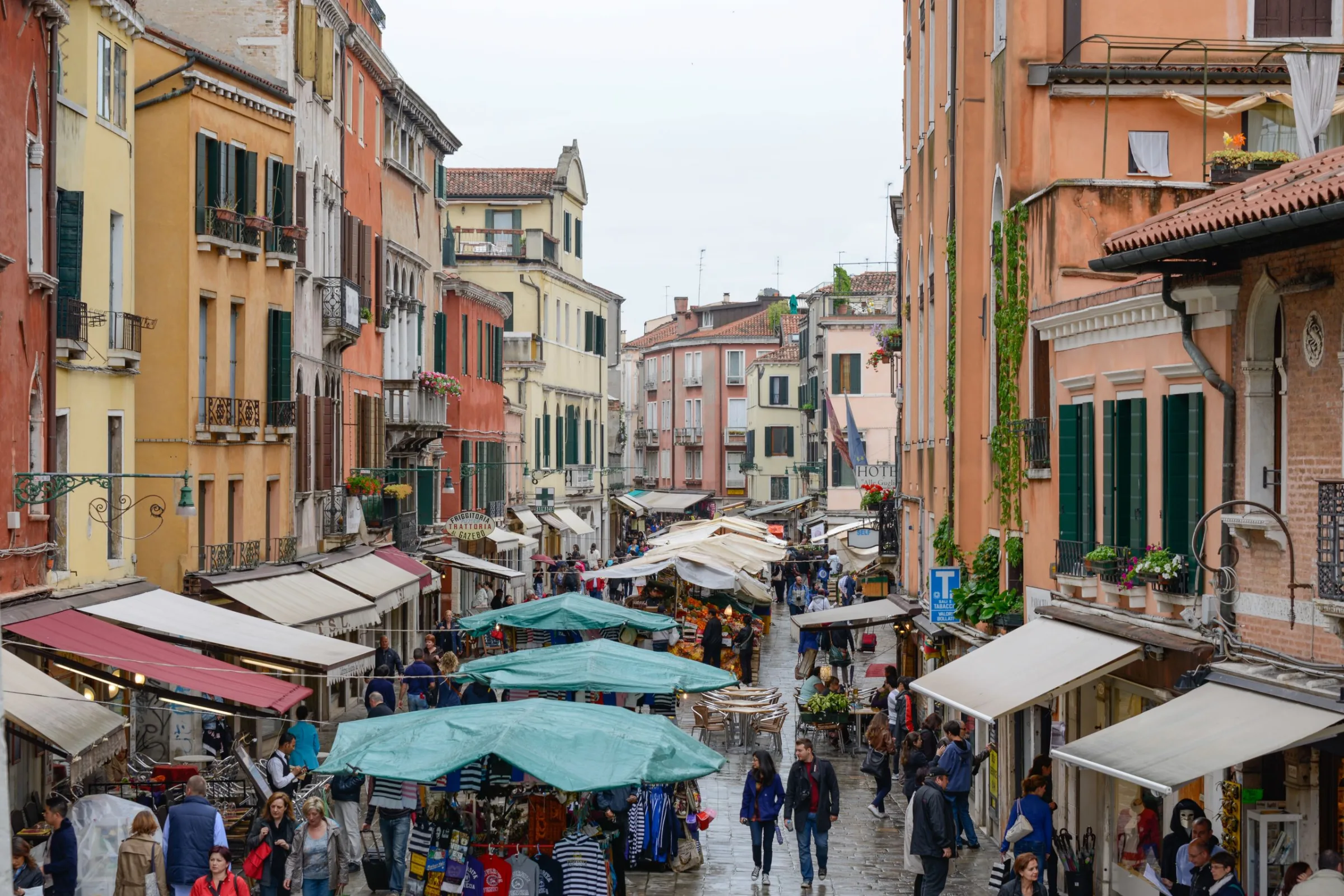
The number that explains the experience is this: a large majority of those visitors are day-trippers, and they arrive within the same three-hour window, walk the same 800-metre corridor between the station and San Marco, and leave before dinner.
The problem is not the annual total. It is the distribution.
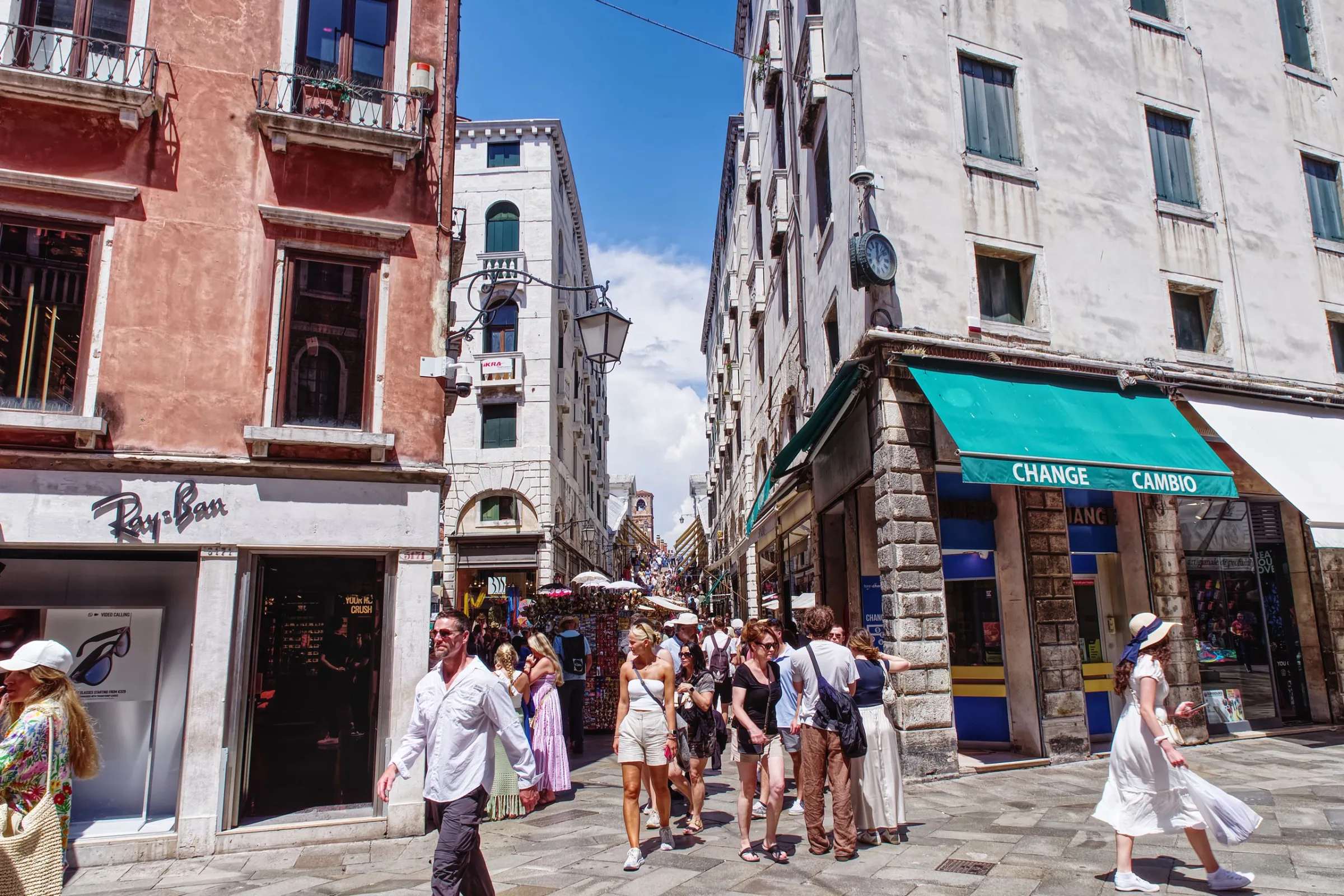
In time. Peak arrival in most affected cities is 10:00–13:00. The same street that is impassable at eleven is comfortable at eight and at seven in the evening.
In space. Studies of visitor movement consistently find that the overwhelming majority of foot traffic follows a small number of routes. In Venice it is essentially one corridor. In Dubrovnik it is the Stradun. In Barcelona it is a handful of Gaudí sites plus a market.
In season. Mediterranean coastal destinations frequently do most of their business in about fourteen weeks.
The tourist is not everywhere. The tourist is in the same four hundred metres as every other tourist, at the same hour, in the same eleven weeks — and two streets away the city is empty.
This is the part that gets lost in the "too many tourists" framing.
A visitor staying three nights spends substantially more per head, spreads that spending across restaurants, accommodation and shops, uses infrastructure at different hours, and is more likely to visit secondary sites. A day-tripper from a cruise ship or a coach arrives, walks the corridor, buys little, and leaves.
So the cost — congestion, waste, wear, infrastructure load — is roughly similar per person, and the benefit is not. This is why almost every serious policy response targets day visitors specifically rather than tourism generally.
Venice: the access fee. From 2024, a booking-and-payment system for day visitors on peak days, initially €5. Early assessments found modest effects on numbers and significant effects on public debate. Its value may end up being that it produces data — the city now knows who is arriving and when, which it previously did not.
Dubrovnik: cruise ship caps. After UNESCO warned about the site's status, the city agreed limits on simultaneous cruise arrivals — two ships and a ceiling of about 4,000 passengers a day — plus staggered docking. This is the intervention with the clearest measured effect, because cruise arrivals are the most concentrated possible form of the problem.
Barcelona: housing, not visitors. The city has moved against short-term rental licences, announcing an intention to eliminate them entirely by 2028. The framing here is instructive: the target is residential displacement rather than crowding.
Amsterdam: demarketing. Actively discouraging particular visitor segments, banning new tourist shops in the centre, moving the cruise terminal. The "stay away" campaign aimed at specific demographics was blunt and appears to have worked on the segment it targeted.
And what does not work: general awareness campaigns asking people to visit other places, which decades of evidence suggest have close to no effect on aggregate behaviour.
For most long-haul trips the flight dominates the footprint so heavily that other choices are a rounding error against it. That does not make those choices pointless — it makes their value local rather than climatic, and worth judging on what they do for the place rather than for the atmosphere.
Individual choices do not solve a structural problem, but they change your experience considerably and they are not nothing.
Stay overnight. The single highest-impact change. It moves you from the costly category to the beneficial one.
Shift your hours. Be at the famous thing at eight in the morning or after six in the evening. This is not a sacrifice — it is when it is best.
Go in the shoulder or off season. Venice in November, Dubrovnik in March. Cheaper, emptier, and the cities function as cities.
Spend locally rather than at the corridor. The economics of overtourism are worst where visitor money does not reach residents.
Almost every destination on the overtourism list spent decades actively recruiting visitors, often with public money, and several still do while simultaneously running mitigation campaigns.
The contradiction is not hypocrisy so much as institutional lag — the marketing agency and the housing department answer to different people. It is, however, the reason nothing moves quickly.

Writer, environment & policy
Nadia covers the parts of travel that involve regulation, carbon and who actually benefits — night trains, overtourism rules, certification schemes. She trained as an urban planner in Beirut, works from Berlin, and reads the impact assessments so you do not have to.

Independent travel journal
Long-form travel writing with the practical parts left in — what it costs, when to go, and what the person who lives there thinks about it.