There is a document. It runs to several pages, it was ratified by the European Union in 2010, and it specifies — among other things — that the dough must be worked by hand, that the finished disc must be no more than 35 cm across, that the raised edge must measure 1 to 2 cm, and that the whole thing must be cooked in a wood-fired oven at 430–480°C for 60 to 90 seconds.
This is Pizza Napoletana STG. It is not a tradition that happens to be strict. It is a specification that a city wrote down because it was tired of arguing.
Flour. Type 00 or a 00/0 blend, with a protein content and a W-strength within a defined band. This governs how much water the dough will hold and how it behaves over a long fermentation.
Water, salt, yeast. Water at 20–22°C, sea salt, fresh brewer's yeast. No oil in the dough, no sugar, no milk. The ingredient list is four items and this is the whole point.
Fermentation. A first rise of about two hours, then division into panetti of 180–250 g, then four to six hours more. Some of the better pizzaioli in Naples run much longer cold ferments, which the specification permits within limits.
Shaping. By hand, from the centre outward, pushing gas into the rim. No rolling pin. No mechanical press. This is the rule most often broken outside Italy and it is the one that most changes the result — a rolling pin flattens the bubbles that make the cornicione.
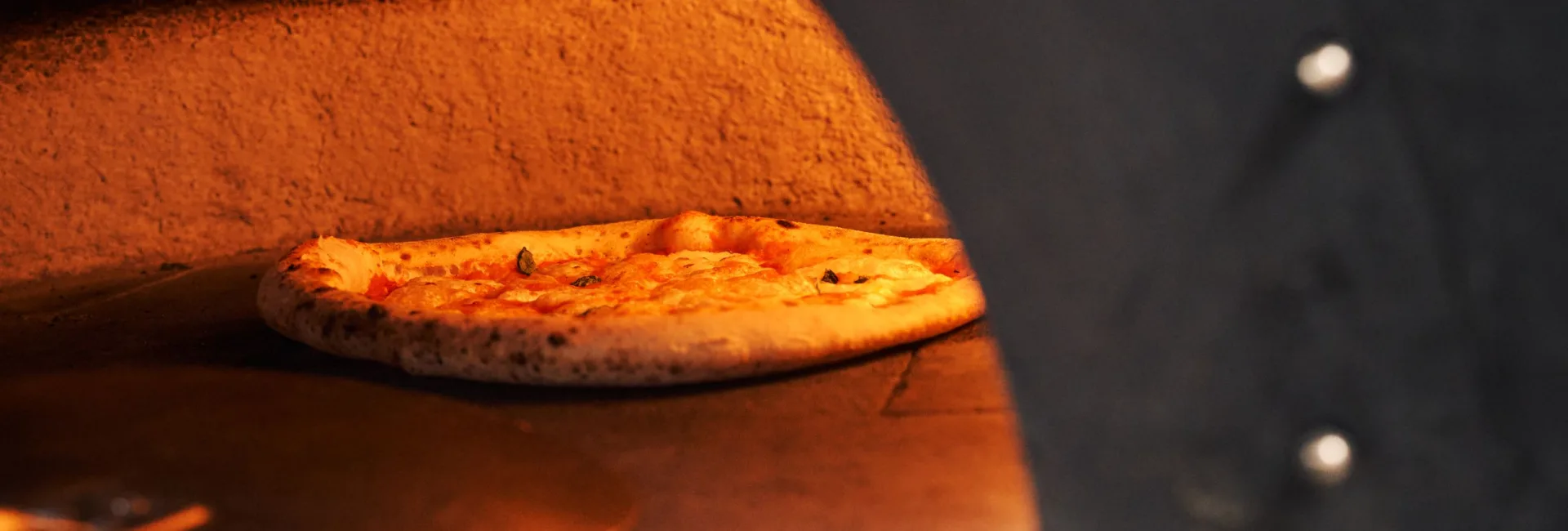
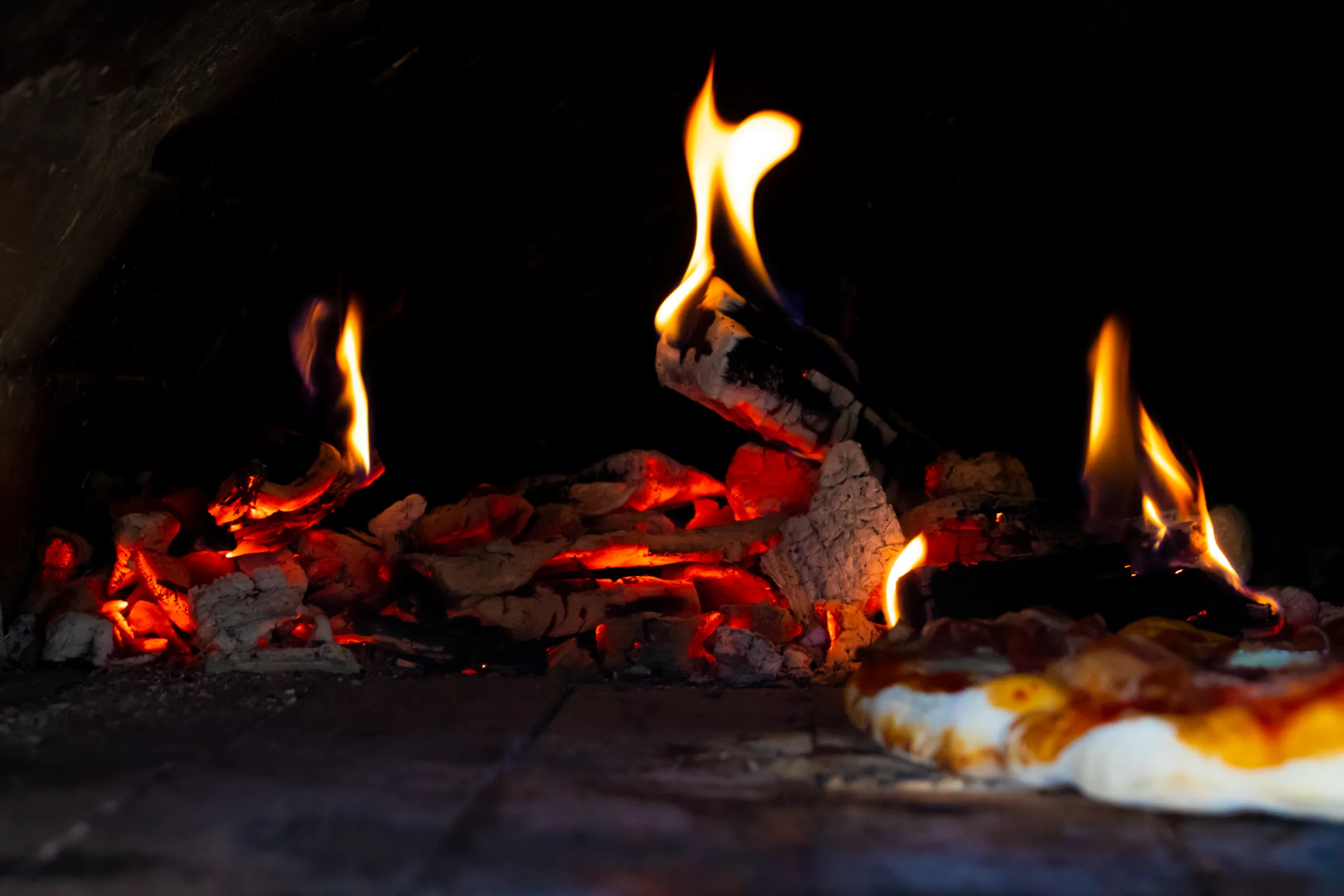
The oven. Wood, domed, floor at around 430°C, dome hotter. The pizza is turned once with a peel and comes out in about a minute with leopard-spotting on the rim — irregular dark blisters that indicate the right heat and the right hydration.
The specification recognises exactly two: Marinara — tomato, garlic, oregano, oil, no cheese — and Margherita — tomato, mozzarella, basil, oil. A third variant, Margherita Extra, allows buffalo mozzarella and San Marzano tomatoes.
Everything else on a Neapolitan menu is legitimate pizza and is not Pizza Napoletana STG. Nobody in Naples is confused by this and nobody is offended by it.
Everything mentioned here was paid for at the normal rate. Beyond The Geo does not accept press trips, hosted stays or comped meals — see our editorial policy for the full position.
The standard account: in 1889, pizzaiolo Raffaele Esposito made three pizzas for Queen Margherita of Savoy, and she preferred the one with tomato, mozzarella and basil — red, white and green, the colours of the new Italian flag — so it was named for her.
Food historians have picked at this for years. A pizza with those ingredients is documented earlier. The letter of thanks from the royal household exists but has been questioned. The most likely truth is that the combination predates the visit and the visit gave it a name and a story.
The story is probably embroidered. The pizza is not. These are separate questions and only one of them matters at the table.
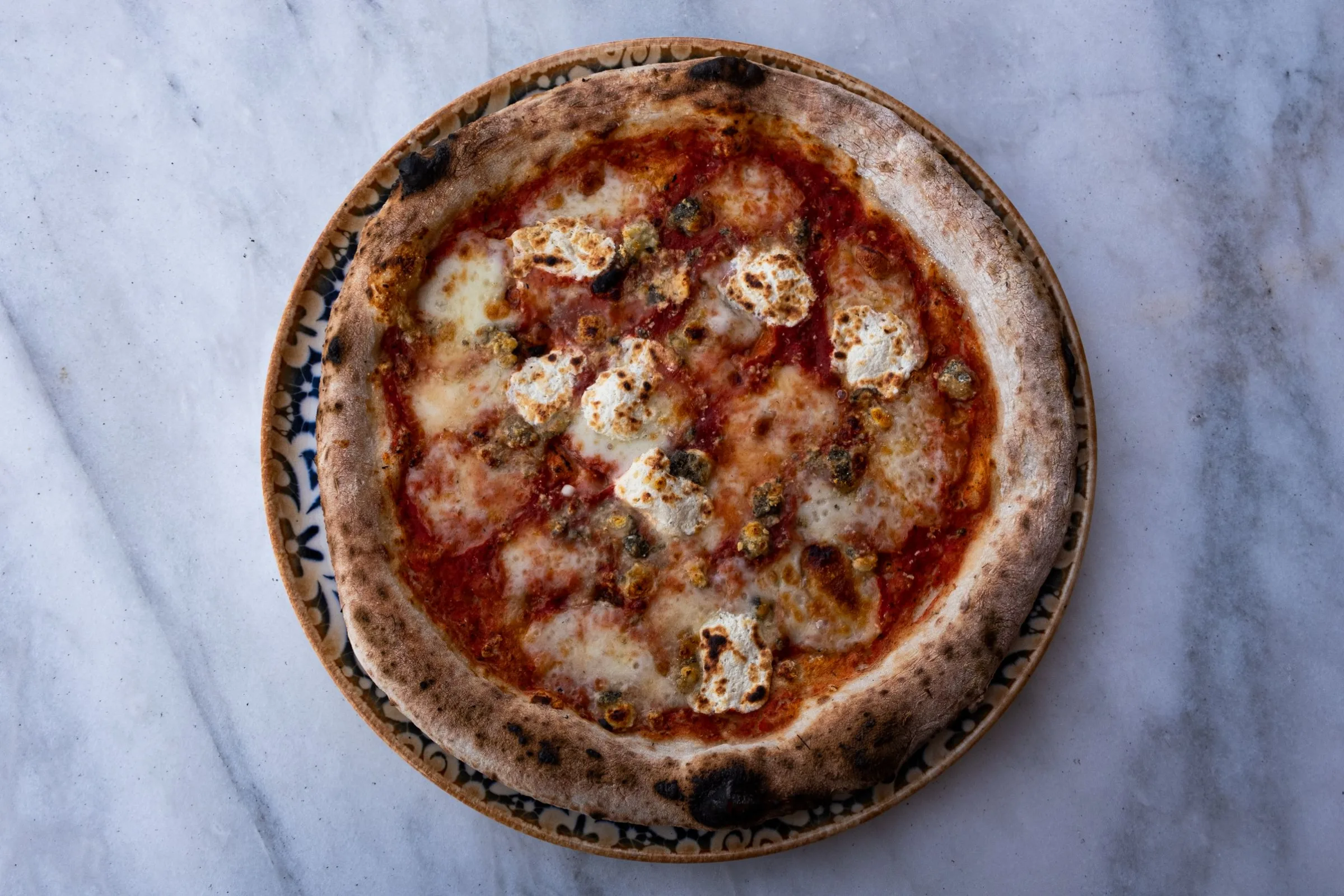
A Neapolitan pizza is soupy in the middle. This is correct and expected — the high hydration and the ninety seconds mean the centre never fully dries. It is eaten with a knife and fork, from the centre outward, or folded into a libretto — quarters, like a small book — and eaten by hand.
It is not shared. One person, one pizza. The portion is calibrated for that.
It is eaten immediately. A Neapolitan pizza that has sat for four minutes is a different and worse object, which is why the good places have no takeaway culture and why delivery is regarded locally as a category error.
The famous three are Da Michele, Sorbillo and Di Matteo, all of which are excellent and all of which now involve a wait of an hour or more. If you have one evening, join a queue; they are famous for a reason.
If you have more than one evening, the neighbourhood places are the better experience — Starita in the Materdei district, Pellone in Vasto, or anywhere in the Sanità with a queue of people who live there. A Margherita runs €5–8. This is one of the cheapest world-class meals available anywhere.
The rate-limiting factor is the oven. A domestic oven maxes out around 250–275°C, which is roughly half what the specification requires, and the difference is not a matter of waiting longer — at lower temperature the base dries out before the rim puffs.
The workarounds, in ascending order of effectiveness: a preheated steel plate on the top shelf under the grill, a dedicated countertop pizza oven, or a real wood oven. The middle option gets genuinely close and costs about the same as four restaurant dinners.

Contributing editor, food
Rafaela cooks, and then writes about why a dish is made the way it is. Based in Porto, she covers markets, producers and the long arguments communities have about their own recipes. She has never once recommended a restaurant she did not pay for.

Independent travel journal
Long-form travel writing with the practical parts left in — what it costs, when to go, and what the person who lives there thinks about it.