Oaxaca has had a decade of international attention and the consequence is a booking culture. Several restaurants now take reservations two months out. Some are worth it. None are necessary.
What follows is how to eat extremely well here with no plan beyond turning up hungry.
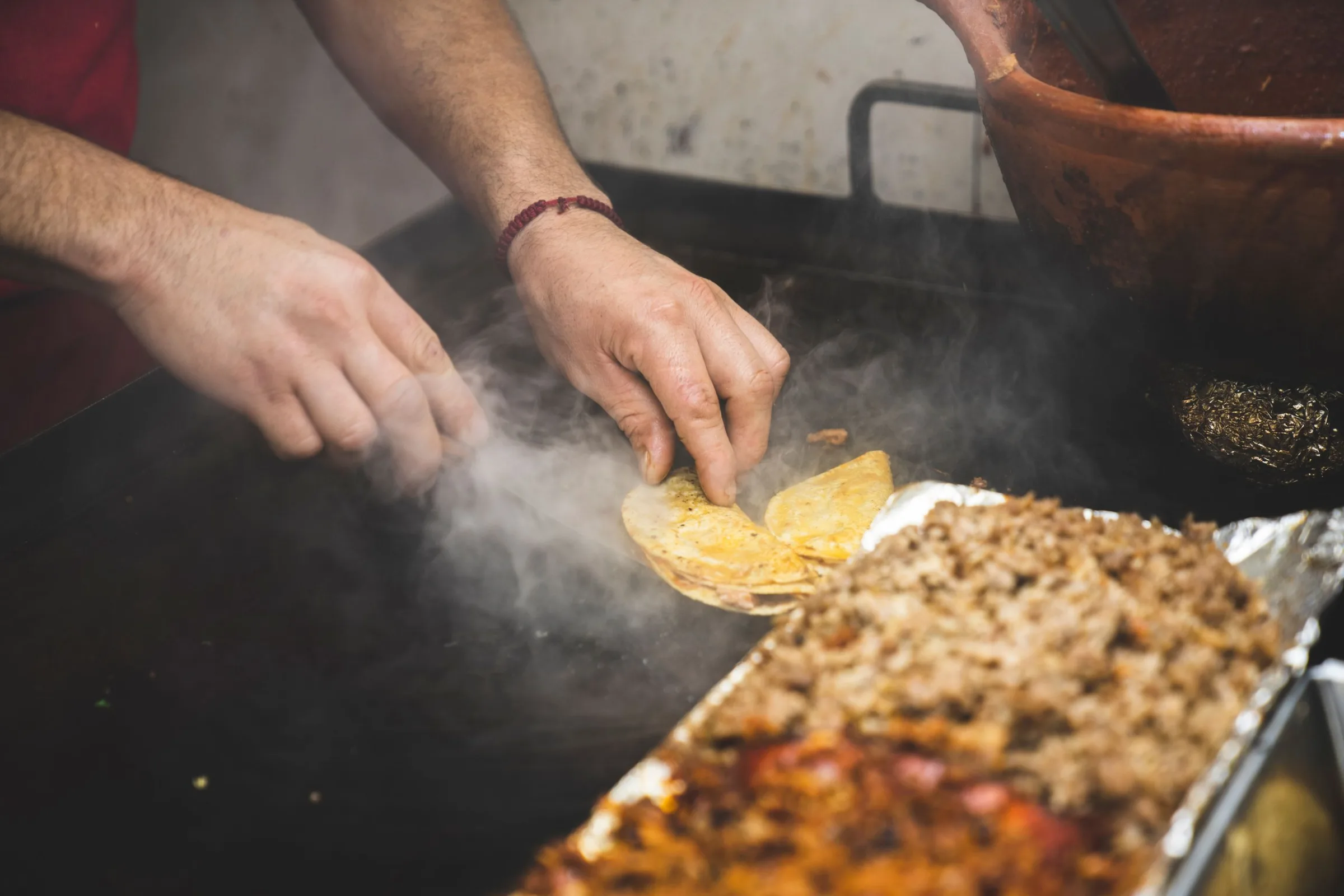
Mercado 20 de Noviembre. The famous one, and famous specifically for the pasillo de humo — the smoke corridor — a passage of charcoal grills where you buy raw meat by weight from one vendor, hand it to a griller, and buy tortillas, salsa, spring onions and nopal from whoever is nearest. You eat standing at a communal counter. It is loud, thick with smoke and one of the great eating experiences in Mexico.
The system confuses first-timers. It is: point at the cut you want, they weigh it, you pay, it goes on the coals, you find a seat. Around 150–250 pesos will feed two people heavily.
Mercado Benito Juárez. Next door, quieter, and the place for the things you take away rather than eat on the spot: chapulines (toasted grasshoppers with lime and chilli), chocolate ground to order, quesillo — the string cheese that Oaxaca makes better than anywhere.
Mercado de la Merced. Ten minutes east and almost entirely local. This is where to eat breakfast. Look for the stalls with the largest clay comal and the shortest menu.
Check the practical details in this article against an official source before you travel. Prices, permits and opening times were verified in the month shown at the top of the page and they move faster than we can re-publish.
Oaxaca is called the land of seven moles. The number is a marketing convenience — there are more — but the seven are a genuinely useful map:
A good mole negro takes two days and around thirty ingredients. Anywhere offering all seven on one menu is making none of them properly.
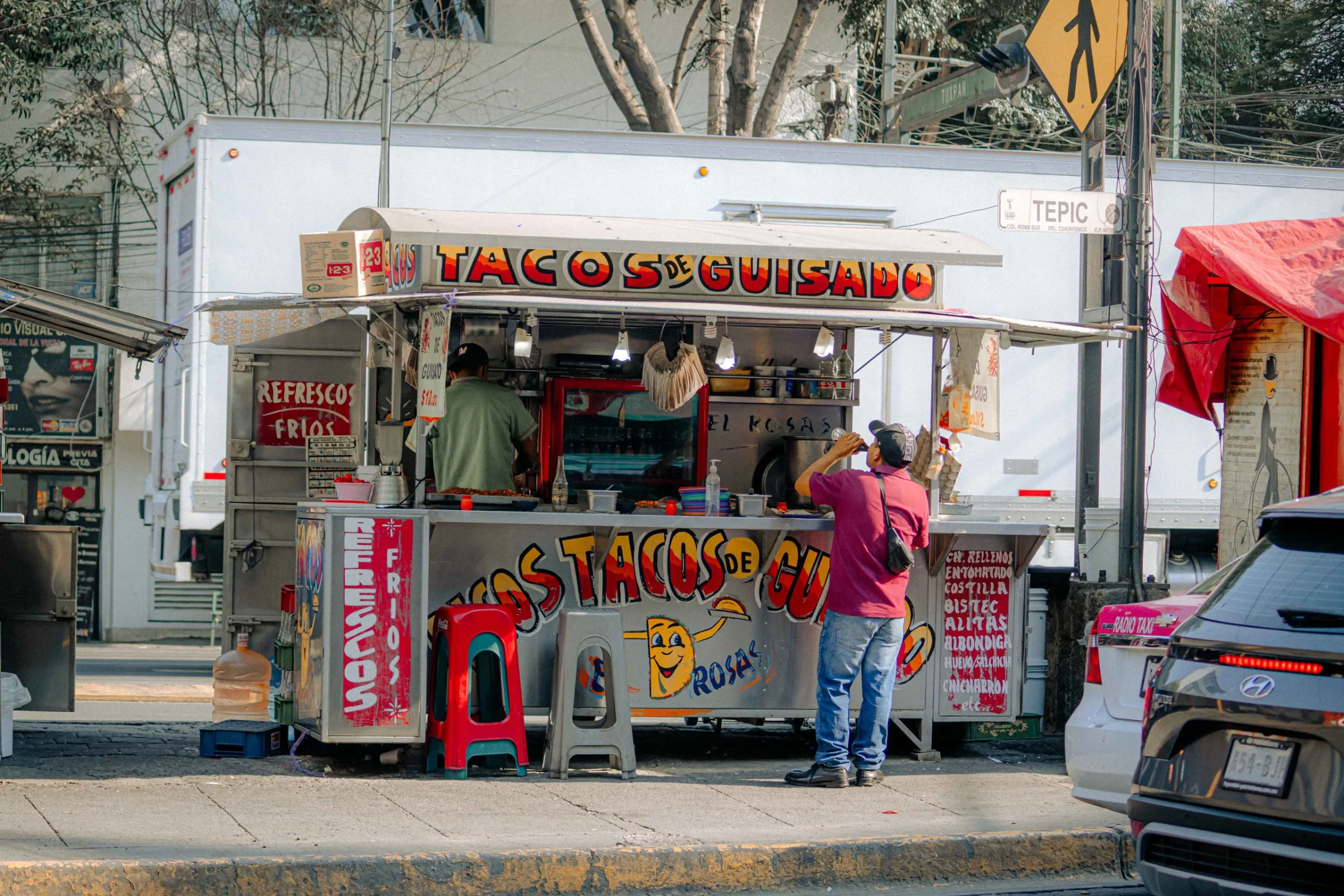
A tlayuda is a large, thin, partly dried tortilla, smeared with asiento (unrefined pork lard), beans, quesillo and meat, then folded and grilled over charcoal. It is a late-night food and it is best from a cart.
The heuristic: find the cart with the longest queue of taxi drivers after ten at night. Expect to pay 60–100 pesos.
Mezcal has acquired a tasting-room culture in the last decade with prices to match. In the villages, and in the plainer bars in the city, it is still what it was: a spirit sold by producers who name the agave variety, the village and the maestro mezcalero, and poured into a small clay cup.
Ask for espadín to start — the most common agave, and the baseline against which everything else makes sense. Then try a tobalá or tepeztate, which are wild agaves that take twelve to twenty-five years to mature and cost accordingly.
Sip it. The lime and salt ritual belongs to bad tequila.
Three villages within an hour that are worth a morning:
Teotitlán del Valle — weaving, natural dyes, cochineal red. Also has excellent comedores that see almost no visitors.
Tlacolula — Sunday market, one of the oldest continuously operating markets in the Americas, and still primarily a market for locals rather than a spectacle.
Santa María del Tule — for the tree, a Montezuma cypress with the widest trunk of any tree on earth, and roughly 2,000 years old. Ten minutes and one photograph, but the photograph is a good one.

Contributing editor, food
Rafaela cooks, and then writes about why a dish is made the way it is. Based in Porto, she covers markets, producers and the long arguments communities have about their own recipes. She has never once recommended a restaurant she did not pay for.

Independent travel journal
Long-form travel writing with the practical parts left in — what it costs, when to go, and what the person who lives there thinks about it.