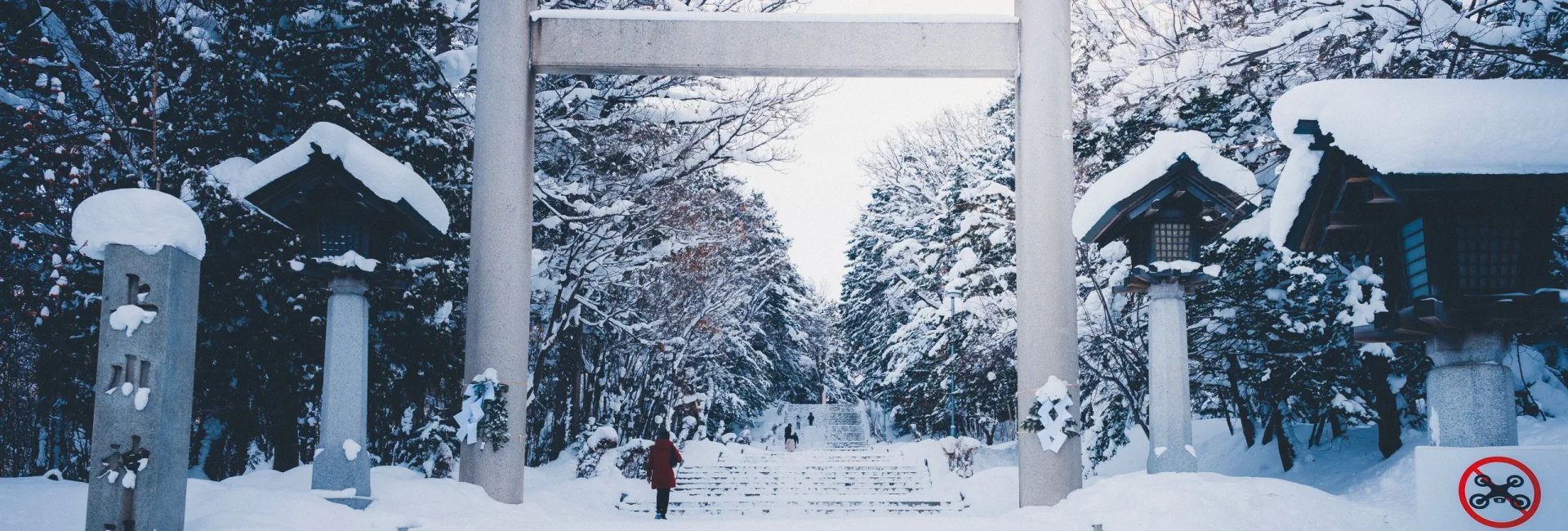
Hokkaido receives, in an average season, somewhere between eleven and fifteen metres of snow. Not depth on the ground — cumulative fall. The town of Sukayu, technically just south on Honshu, holds records that read like typographical errors. The relevant point for a visitor is that this is not snow as an event. It is snow as a climate, with an infrastructure and a set of manners built around it.
I spent sixteen days there in February. It was the least crowded and most consistently beautiful stretch of travel I have done in Japan.
Cold, dry air moves south-east off Siberia, crosses the relatively warm Sea of Japan, picks up moisture and dumps it on the western slopes of Hokkaido. The result is snow with very low water content — the "japow" that has made Niseko an international ski destination and priced it accordingly.
You do not have to ski to benefit. The same conditions produce the thing I actually came for: forests where every branch carries fifteen centimetres of undisturbed powder, in absolute silence, within twenty minutes of a train station.
Shiretoko Peninsula. A UNESCO World Heritage site in the far north-east where, from late January to March, drift ice arrives from the Sea of Okhotsk and locks the coastline. You can walk on it with a guide and a drysuit. It is the southernmost point in the northern hemisphere where seasonal sea ice reaches — and it is arriving later and thinner every decade, which the guides will tell you about at length and with feeling.
Noboribetsu. An onsen town built beside Jigokudani, "Hell Valley," a steaming volcanic crater that supplies eleven different kinds of thermal water. Sitting in an outdoor bath at 42°C while snow lands on your head and dissolves is among the more persuasive arguments for winter travel.
Biei and Furano. Rolling agricultural hills that in summer are photographed for flower fields and in winter become minimal, almost abstract — single trees on white ground under grey sky. The most photographed of them, the "Christmas tree," is on private farmland and the farmer has had to fence it. Stay on the road.
Kushiro marshland. For the red-crowned cranes. About 1,900 birds survive in Japan, most of them here, and in winter they gather at feeding stations and perform a courtship dance that is exactly as extraordinary as the wildlife documentaries suggest.
The JR Hokkaido rail network is thinner than Honshu's and getting thinner — several rural lines have closed in the last decade. The Hokkaido Rail Pass is worth it if you are doing Sapporo–Asahikawa–Abashiri, and not worth it if you are staying in the south-west.
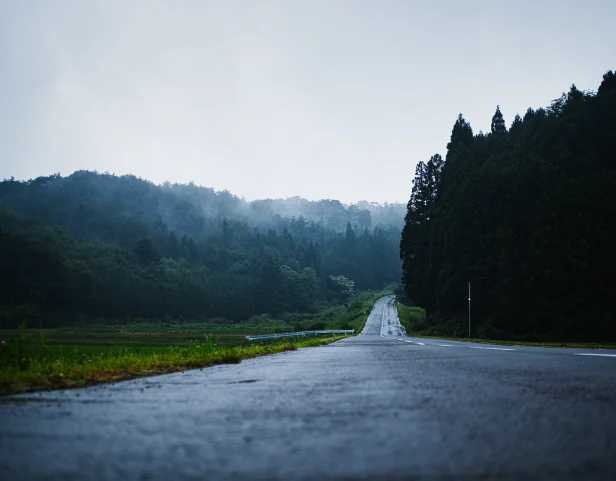
Driving is viable and I would recommend it for Biei, Furano and Shiretoko, with three conditions: winter tyres are legally required and universally fitted on rentals; you should have driven on snow before; and you should treat the forecast seriously, because roads close.
Check the practical details in this article against an official source before you travel. Prices, permits and opening times were verified in the month shown at the top of the page and they move faster than we can re-publish.
Hokkaido is Japan's agricultural and dairy heartland and the food reflects it in a way that surprises people who expect national uniformity.
Temperatures run −5°C to −15°C in the lowlands, colder inland, with wind chill on the Okhotsk coast that is genuinely dangerous. But the interiors — trains, shops, restaurants, and especially hotels — are heated hard. The failure mode is not being too cold outside; it is sweating through a base layer indoors and then going out.
Dress in layers you can shed in a vestibule in thirty seconds. The locals do this without thinking and it is the single most useful thing to copy.
Boots with actual tread, a windproof outer shell, and — the one people forget — sunglasses. Fresh snow under low winter sun is blinding.
Early February is the sweet spot: drift ice has arrived, the Sapporo Snow Festival is on, and the snow is at maximum depth. Late December and early January are busy with domestic holiday travel. March is warmer and the ice is going. Avoid the week around New Year unless you have booked months ahead.

Editor & co-founder
Elin started Beyond The Geo in 2019 with a notebook of border-crossing times and guesthouse phone numbers. She writes mostly about the North Atlantic and the Arctic, and she is the reason every article on this site carries the month its prices were checked.
Independent travel journal
Long-form travel writing with the practical parts left in — what it costs, when to go, and what the person who lives there thinks about it.